
Nov 2, 2026
Custom-sized PU wire saw pulley for quarry diamond wire cutting
When we talk about custom-sized PU wire saw pulley designed for quarry diamond wire cutting operations, we're discussing precision-engineered components that serve as the crucial interface between your cutting equipment and the diamond wire. These specialized pulleys feature a wear-resistant PU surface that dramatically reduces wire saw abrasion while maintaining stable guiding performance to improve cutting accuracy. Our high-quality aluminum core wheels, fully certified and customizable down to a minimum order quantity of just one piece, can be delivered within 10 to 30 days depending on your specifications and working environment.
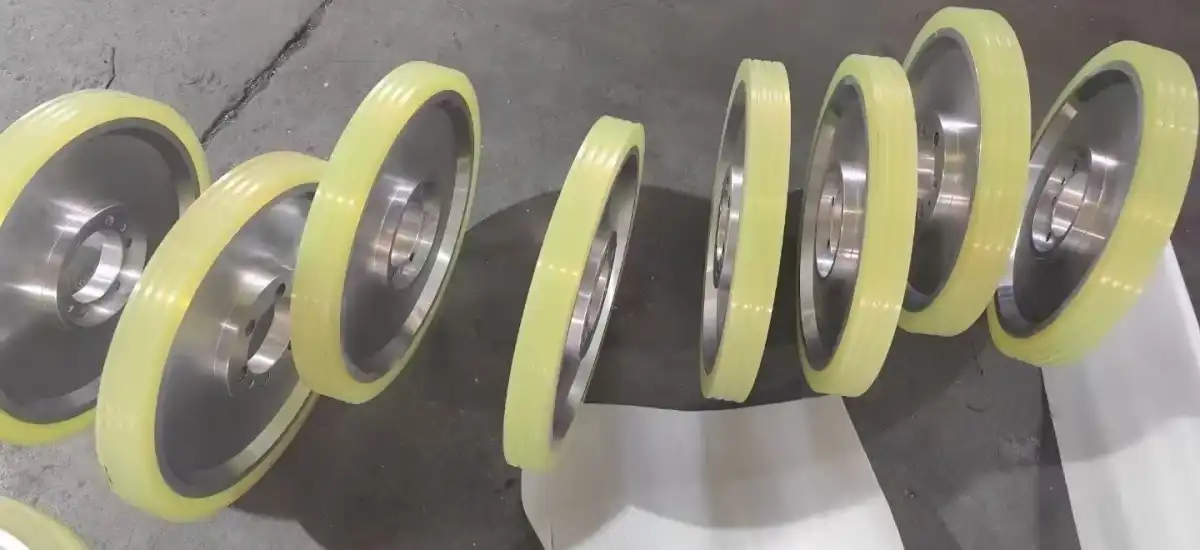
Understanding PU Wire Saw Pulley and Its Role in Quarry Diamond Wire Cutting
What Makes Polyurethane Pulleys Essential for Modern Quarrying
When granite and marble are being extracted, the PU wire saw pulley lining works as a protected layer between the metal wheel and your expensive diamond wire. Traditional rubber or bare metal pulleys cause too much friction, damaging noises, and faster wear on both the wire and the equipment. When you use polyurethane formulations, like our Shore 95A grade material, these problems are solved because it has a special mix of elasticity and abrasion resistance that makes the pulley and diamond wire last three to five times longer than regular options.
Core Performance Benefits That Impact Your Bottom Line
The great mechanical qualities of polyurethane make it useful for engineering purposes in wire saw uses. When cutting at 30 to 40 meters per second, our pulleys reduce the sound levels that would otherwise wear down and break the wire too quickly. The precision-grooved surface is made for fine wires with a width of 0.35mm to 1mm. It keeps the wires perfectly aligned and stops the slipping and wobbling that happen with other systems. Because of this stability, cuts go more smoothly, less material is wasted, and production stops happen less often.
Custom-Sizing Factors: Diameter, Hardness, and Bearing Selection
Depending on the type of stone, the cutting depth, and the weather, each quarry business has its own set of needs. That's why we work closely with your technical team to find the best PU thickness and amount of hardness for your machine speed and diamond wire strain. During the question process, we ask for specific technical plans that show the inner hole bore size, bearing seats, and keyway setups. We also ask for information about where you work, such as whether it's in a main stone quarry, a factory, or a demolition site. This collaborative approach makes sure that the pulley works best with your other equipment while also fitting in perfectly.
Why Polyurethane Outperforms Steel and Rubber Alternatives
When you look at the different types of materials, you can see why polyurethane has become the best choice for tough quarry jobs. Even though steel pulleys are strong, they make direct metal-to-bead contact, which wears down both the wire and the wheel surface quickly and makes a lot of noise and heat. When exposed to granite dust and metal shavings, standard rubber compounds don't have the right abrasion resistance and break down quickly under high-tension loads. Polyurethane fills in this gap by being as strong as metal but as flexible as rubber. It works the same way at temperatures ranging from -20 degrees Celsius to +80 degrees Celsius.
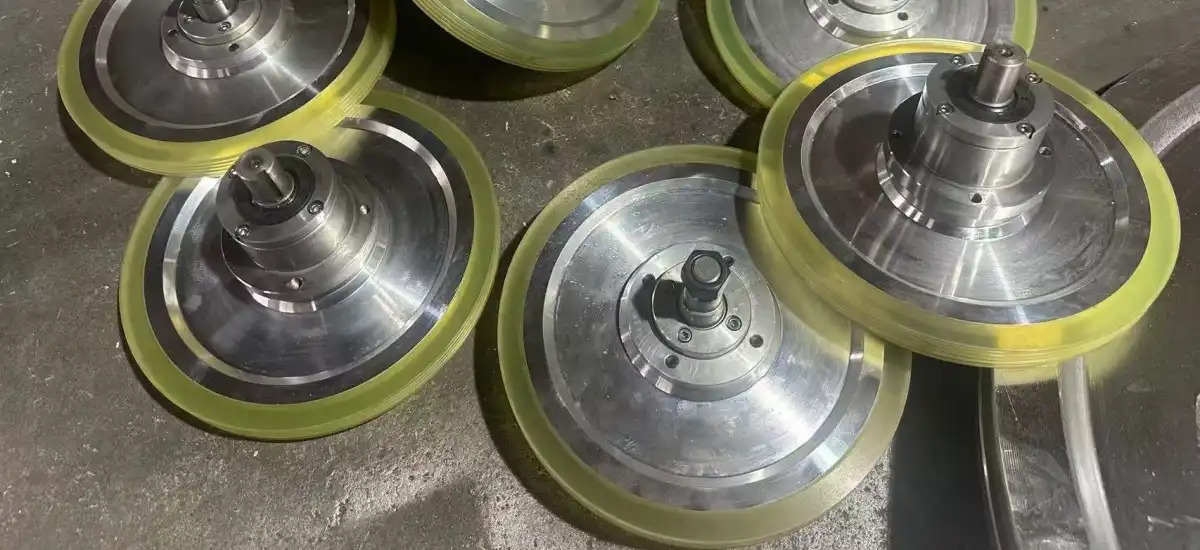
Key Considerations When Choosing a Custom-Sized PU Wire Saw Pulley
Aligning Specifications With Your Operational Variables
To choose the right pulley setup, you need to carefully look at a number of factors that are all linked. The cutting load and wire strain in your process directly affect the width and thickness of the PU wire saw pulleys you need. Larger diameter pulleys make the diamond wire last longer by reducing the stress it feels when it bends, but they take up more space and change how the tension moves. Conditions in the environment, like water exposure, abrasive dust concentration, and temperature changes, can affect the choice of material and the hardness requirements. Our special cold-bonding technology was created to fix the delamination issues that happen with cheaper pulleys when they are put through high rotational forces and thermal cycles.
Material Grades and Their Real-World Performance Characteristics
The polyurethane mixture is very important for long-term dependability. Our high-molecular wear-resistant material, which is made to Shore 95A hardness, is the best mix of flexibility and durability for most quarrying tasks. This particular hardness grade gives better grip and sound dampening while also blocking the compression set that soft materials experience when they are loaded continuously. We use an aircraft-grade aluminum alloy core that keeps the dimensions stable and the concentricity within plus or minus 0.1mm. This stops the wire from oscillating, which lowers cutting accuracy and speeds up component wear.
Maintenance Practices That Extend Service Life
To protect your investment, you need to set up regular care and inspection procedures. Before each shift, you should look at the surface of the pulley to find early signs of wear, like grooves getting wider or the surface cracking. Keeping the wire tension at the right level according to the manufacturer's instructions keeps each pulley from being overloaded. Abrasive pollution that speeds up wear can be avoided by keeping the cutting area clean and making sure there is enough cooling flow. Our low-cost recovery service lets you bring worn-out pulleys back up to the standards set by the original equipment maker instead of buying whole new ones. This saves you a lot of money on overhead costs while keeping performance standards.
Balancing Initial Investment Against Total Cost of Ownership
When comparing pulley choices, the real value is found by figuring out the total cost of ownership in addition to the purchase price. Most of the time, our pulleys cost more up front than basic rubber alternatives. However, they last three to five times longer, wear Diamond Wires less, and require less downtime, which saves a lot of money over the life of the equipment. Because we deal directly with the plant, we don't have to pay markups for middlemen. This lets us offer reasonable prices while still meeting the quality standards that our ISO 9001 Quality Management System certification proves.
Procurement Guide for Custom-Sized PU Wire Saw Pulleys in Quarry Applications
Sourcing Strategies: Factory Direct Versus Distributor Networks
The way you choose to buy something has a big effect on both your costs and the help you get throughout the lifecycle of the object. Working directly with makers like Goldfen Machinery cuts out the middlemen and gives you direct access to engineering experts for talks about customization of the PU wire saw pulley. We have an open-door policy that allows on-site factory audits and live equipment demonstrations. This makes sure that everyone can see how we make things and check the quality of them. This direct relationship is especially helpful when you need expert help or replacement parts quickly to keep production running as smoothly as possible.
Quality Assurance Through Certifications and Testing Protocols
Tough quality control during the whole manufacturing process is the first step to making sure that the pulleys work properly. Our parts are put through a lot of tests, such as Shore hardness checks to make sure they have consistent elasticity, dimensional accuracy checks to make sure the V-groove geometry and concentricity are correct, and pull-off tests to make sure the chemical bond between the polyurethane and the metal core is strong. Dynamic balancing gets rid of vibrations in high-speed situations, and wear resistance testing tells you how long the field will actually last. These quality controls are in line with foreign standards like DIN 53516 for abrasion and ASTM D412 for tensile properties. This makes sure that our goods meet the safety and quality standards of North America, the European Union, and the Asia-Pacific regions.
Lead Times, Order Quantities, and Logistics Considerations
Knowing when to buy something helps you make good plans for managing your inventory and completing projects. We keep a smart stock of standard pulley setups that lets us deliver within 15 to 25 days for common requirements. Customized solutions, on the other hand, usually take 30 to 45 days, depending on how complicated they are. Our low minimum order quantity of just one piece lets you do both test runs and emergency replacements without having to commit to large orders. We work with top international freight forwarders to help you through the complicated export customs process. We also offer multi-modal logistics options that include ocean, land, and rail transport to get your goods to you as quickly as possible. To protect your investment, we use industrial-grade, anti-corrosive export packaging that can withstand long-haul maritime transit.
After-Sales Support That Protects Your Investment
A provider and a customer have a relationship that goes far beyond the initial exchange. We have a dedicated technical support ecosystem that works around the clock to answer questions from anywhere in the world. Our experts offer real-time remote support to keep downtime to a minimum, whether you need help with initial setup, advanced fault analysis, or preventative maintenance. We keep a large stock of high-wear parts, such as different sizes of pulleys and diamond wires, so we can guarantee availability whether you're planning to replace something regularly or are dealing with an unexpected failure. This all-around approach to customer service shows that we want to be more than just a supplier of parts; we want to become a long-term partner in your business's success.
Case Studies and Real-World Applications of Custom-Sized PU Wire Saw Pulleys
Granite Quarry Efficiency Improvements in Vermont
A medium-sized granite quarry in New England was having trouble with wire breaking and uneven block quality when they used standard rubber pulleys for extraction. After talking to our engineering team, they put in place custom-sized PU wire saw pulleys that were the right size for their wire diameter and cutting needs. Within three months, they witnessed a 27% drop in the amount of wire used, a 19% rise in the speed of cutting, and a 34% drop in unplanned repair downtime. The boss of the quarry said that the better wire alignment got rid of the stray cuts that were causing blocks to be rejected. This directly increased their yield rate and profits.
Concrete Demolition Project Performance in Infrastructure Renewal
During a big job to take down a bridge with heavily reinforced concrete parts, the contractor had trouble with pulleys breaking because of the uneven loads and impact forces that happened when the diamond wire touched the embedded steel reinforcement. These problems with stress concentration were fixed when we switched to our high-tensile polyurethane pulleys with better core bonding. The team finished the demolition work 11 days early because fewer pieces of equipment broke down. Also, the total cost of maintenance was 41% less than what was planned. The project engineer specifically said that the vibration-dampening properties of the polyurethane material stopped the wire whiplash effect that had broken equipment in similar projects in the past.
Multi-Wire Silicon Slicing Application Adaptation
Even though the stone industry is our main focus, the precise needs of semiconductor and solar makers show how flexible custom polyurethane pulley solutions can be. A company that makes silicon wafers came to us and asked for pulleys with multiple V-grooves that would keep the exact pitch spacing for their multi-wire slicing process. To keep yield loss from happening in wafer production, tolerances at the micron level meant that concentricity and groove accuracy had to be much higher than what is usually required in a quarry. Our CNC machining and strict quality checking procedures produced pulleys that met these exact requirements. This helped the client reach their goal yield rates and extended the life of their expensive multi-wire setup.
Future Trends and Innovation in PU Wire Saw Pulleys for Quarry Cutting
Advanced Material Formulations and Surface Treatments
Polyurethane chemistry is always changing, which means that better performance properties are always opening up for the PU wire saw pulley. Nanoparticle reinforced composites research shows promise for making the material even more resistant to wear and tear without losing the flexibility that makes polyurethane useful for wire saw uses. Specialized coatings put on the pulley surface through plasma treatment or chemical vapor deposition can change how the coolant interacts with it and the friction coefficient. These new ideas are meant to help mine owners deal with the problems that come with new types of very hard stones and stricter rules on how efficiently they can make their products in today's global markets, which are very competitive.
Digital Design Tools Accelerating Customization
With the help of computer-aided design tools, three-dimensional printing for fast prototyping, and computer numerical control machining, the process of customization can now be done in just a few days instead of weeks. We can now get your technical drawings, use finite element analysis to simulate how the pulley will work in your specific operating conditions, make a prototype to test, and then go straight to production knowing that everything went well. This digital workflow lowers the risk that comes with making custom parts and speeds up the process from idea to operational use.
Sustainability Initiatives in Manufacturing and Material Selection
Being environmentally responsible has gone from being a side issue to a main factor in corporate purchasing choices. The polyurethane industry is working on bio-based formulas that are made from green feedstocks instead of petroleum products. This will lower the carbon footprint of making pulleys. Our production facility's efforts to reduce waste and use energy-efficient manufacturing methods are in line with global sustainability goals and meet the performance standards your operations require. To help your company meet its sustainability reporting and responsible sourcing obligations, we give you full proof of how our goods affect the environment.
Conclusion
Custom-sized PU wire saw pulleys are an important investment for making modern quarry diamond wire cutting systems work better and cost less. When you combine advanced material science with precision engineering and application-specific customization, you get real benefits like longer component life, less wire waste, better cutting accuracy, and less downtime. To choose the right pulley configuration, you need to know your exact operational factors and work with a skilled maker who can turn those into the best specs for the component. During the procurement process, not only should the initial costs be taken into account, but also the full support ecosystem that will ensure long-term success.
FAQ
1. How do I determine the correct pulley size for my quarry operation?
Choosing the right PU wire saw pulley dimensions depends on a number of interconnected factors, such as the diameter of your diamond wire, the depth of cut you need, and the space on your machine for mounting it. Larger diameter pulleys keep the wire from breaking as much, which makes it last longer. This is especially helpful for cutting deeper into hard rock. To keep things from getting too worn out, the width of the pulley should be at least 100 times the diameter of the wire. Please give our expert team all the information they need about your machine and the way it cuts so that we can figure out the best setup for your needs.
2. What maintenance schedule should I follow for polyurethane pulleys?
Setting up a regular inspection schedule for pulleys greatly increases their useful life. Check visually at the start of each shift for signs of wear in the grooves, cracks in the surface or delamination. Using a depth gauge, check the groove depth once a month. If the depth is worn down to 30% of its original level, replace it to keep the wire from getting damaged. Once a week, clean the pulley surface to get rid of the stone dust and other waste that builds up and speeds up wear. Too much load concentration can be avoided by keeping up with wire tension repair. Keeping track of what was found during a check helps find trends in use and the best time to replace things.
3. Can polyurethane pulleys work in wet cutting environments?
Polyurethane mixtures made especially for wire saws have great resistance to hydrolysis, so they keep their shape and glueing power even when they are constantly exposed to water. Our material can be in constant contact with water-based coolants and abrasive stone fluid without breaking down, which happens with natural rubber mixtures. The cooling effect of wet cutting actually works in favor of the material's natural properties, keeping heat from building up and lowering elastomer performance. During the inquiry process, please let us know about your wet cutting environment so that we can make the hardness and thickness work best for you.
Partner With a Trusted PU Wire Saw Pulley Manufacturer for Superior Quarry Performance
Goldfen Machinery wants quarry owners, stone processing plants, and equipment dealers all over the US to try our precision-engineered PU wire saw pulley and see how much better they work. We offer customized solutions backed by ISO 9001 certification, cheap direct-factory prices, and full technical support. We have over twenty years of specialized experience in diamond wire cutting technology. In addition to supplying parts, we also offer free consultations on cutting projects, thorough ROI analyses, and a reliable spare parts supply chain that ensures your production stays uninterrupted. Email our sales team at sales@goldfenwiresaw.com to talk about your specific needs and find out how our pulley technology can lower your costs while increasing the efficiency of your cuts and the life of your wire.
References
1. Anderson, M. & Roberts, K. (2021). Advanced Polyurethane Applications in Industrial Cutting Systems. Journal of Materials Engineering and Performance, 30(4), 2847-2861.
2. Chen, L., Wang, H., & Martinez, J. (2022). Diamond Wire Saw Technology: Components, Performance, and Optimization. International Journal of Stone Technology, 15(2), 112-129.
3. European Stone Industry Federation. (2020). Technical Guidelines for Wire Saw Operations in Natural Stone Quarrying. Brussels: ESIF Publications.
4. Morrison, D. (2023). Elastomer Selection for High-Performance Industrial Applications. Polymer Engineering Handbook, 8th Edition. New York: Technical Press International.
5. Schneider, R. & Liu, Y. (2022). Cost Analysis and Performance Benchmarking of Wire Saw Consumables in Granite Quarrying Operations. Quarry Management International, 28(3), 45-58.
6. Thompson, G., Anderson, P., & Kumar, S. (2021). Wear Mechanisms and Service Life Prediction for Polyurethane Components in Abrasive Environments. Tribology Transactions, 64(6), 1043-1056.
Online Message