
Nov 2, 2026
How Does a Wire Saw for Stone Cutting Improve Efficiency and Accuracy?
Wire saw for stone cutting transforms quarrying and fabrication operations by delivering precision cuts with minimal material waste. Unlike traditional sawing methods that generate excessive kerf loss and struggle with oversized blocks, this diamond-impregnated technology uses a continuous flexible cable threaded with abrasive beads to slice through granite, marble, and reinforced concrete. The system operates through a looped cutting mechanism where the wire travels at controlled linear speeds between pulleys, maintaining consistent tension while coolant systems dissipate heat. This approach solves critical production challenges including slow cutting rates, frequent equipment failures, and the inability to execute complex geometries, enabling quarry operators and stone processors to meet tight deadlines while maximizing yield per cubic meter.
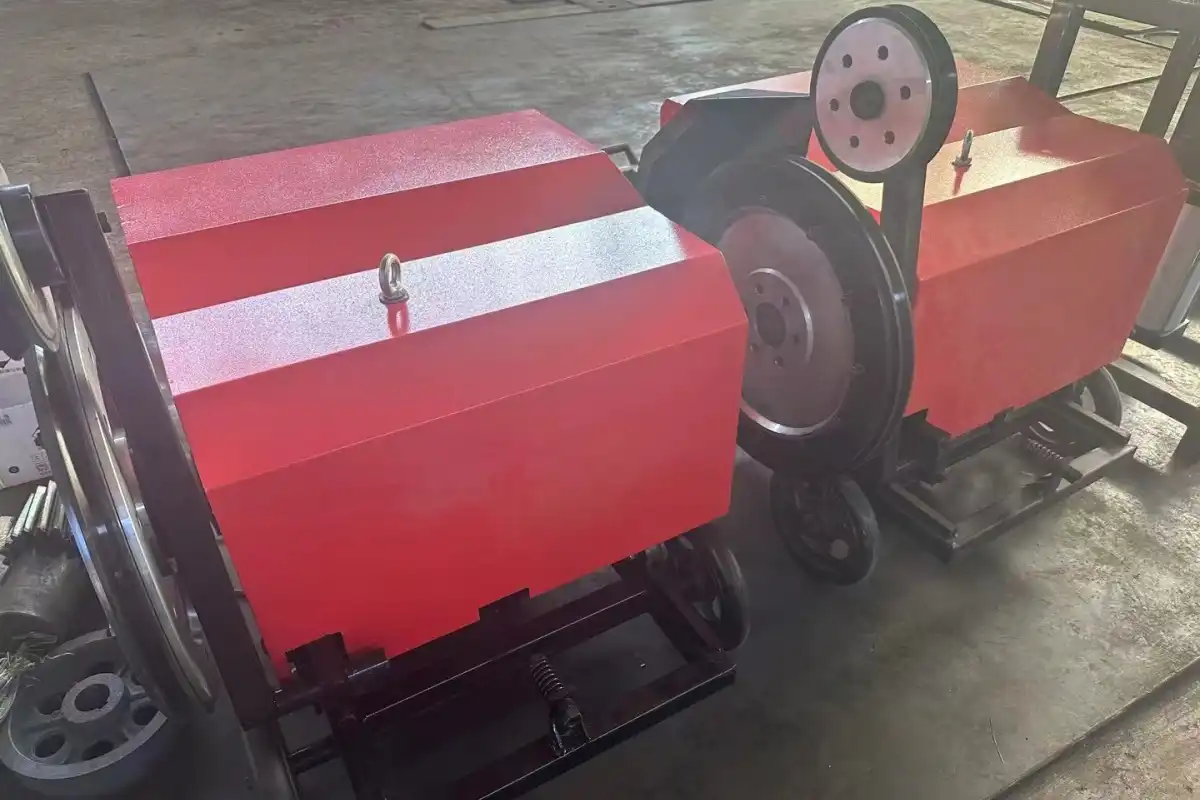
Understanding Wire Saw Technology in Stone Cutting
The Core Mechanics of Diamond Wire Systems
Modern wire saw for stone cutting have advanced. Cutting wires are high-tensile multi-strand steel cables that can tear apart over 2000 MPa. Vulcanized rubber or springs secure diamond beads on wire. These beads include 30/40 to 50/60 US Mesh synthetic diamond grit in a sintered cobalt or iron matrix. New cutting edges appear when the surface wears.
Cutting uses friction instead of breaking force. The diamond segments cut through the stone's crystal structures when the wire loop travels 20–35 m/s. Water coolant removes stone slurry and prevents heat damage. Tension systems maintain wires tight and can withstand 2.5 tons of pulling power without breaking. Controlled speed, precise tension, and continual cooling provide clean, millimeter-accurate cuts.
Component Integration for Optimal Performance
Many pieces must cooperate for wire sawing to function. Guide pulleys with sealed bearing assemblies prevent stone dust from entering the wire route. Tension wheels adjust cable tension to accommodate for temperature and bead wear over lengthy cutting cycles. The primary motor, generally 37KW or more, delivers consistent rotational power that driving pulleys convert into linear motion.
Control devices handle cutting factors live. Modern machines include configurable logic controllers that alter linear speed from 0 to 45 m/s dependent on material hardness and user input. Technicians may adjust operations without entering the cutting zone using portable wireless remotes. This improves safety and speed. Water supply systems maintain coolant flow rates high to prevent wires from overheating and dispose of slurry environmentally.
Technical Properties Defining Cutting Quality
The physical qualities of diamond wire determine cutting outcomes. Bead density is normally 28–40 per meter. Higher densities are ideal for hard granite and lower for soft marble. Beads are 7.2–11.5 mm wide, depending on their use. Bigger beads cut harder but leave rougher surfaces.
Vulcanization integrity is crucial to quality. Effective rubber bonding prevents beads from spinning during high-speed machine operation, preventing uneven wear and cut surfaces. Concentricity testing aligns beads with the wire axis, reducing precision-harming vibrations. The flexible steel core allows the wire to follow minor curvature radii and not fatigue after thousands of cutting cycles.
Key Factors Improving Efficiency with Wire Saw Cutting
Accelerated Production Through Continuous Operation
Run times are much shorter with wire saw for stone cutting. While circular saw blades need frequent replacement, diamond wire may cut for a long period before the beads need to be replaced. The continuous loop design eliminates reciprocating tool start-stop patterns. This maintains material removal rates, which supports manufacturing schedules.
Automating chores boosts speed. CNC wire saws cut pre-programmed sequences without human intervention. Skilled technicians can operate many machines simultaneously. Built-in sensors monitor cutting progress, motor load, and wire tension and rapidly adjust settings to optimize machine performance. This self-regulation prevents human mistake or sluggish manual changes from interrupting production. This is particularly beneficial at night and on weekends when staffing is minimal.
The speed boost extends beyond one cut. Compared to blade installation or waterjet nozzle calibrations, wire saw setup is simple. Operators just pass wire via guide rollers and set tension to cut. Change block sizes or cutting angles by moving simply the pulleys. This maintains production as requirements vary.
Precision Cutting Reducing Material Waste
Accuracy makes wire saw technology business-friendly. The small cutting kerf, generally less than 10mm depending on the bead size, maintains more stone than circular saws, which cut pathways 20mm or larger. This gap is significant for large-scale activity. By lowering kerf loss, a quarry that removes 500 cubic meters of stone per month may recover many more cubic meters per year. Profits rise without cutting additional stone.
Precision in measurements reduces subsequent processing. Clean, straight cuts with minimal surface imperfections might save grinding or polishing, which involve a lot of effort and costly abrasives. This precision benefits stone carvers who manufacture unique architectural pieces, as complicated forms may be cut and fitted without finishing. Multiple processing units are less required since angled cuts and curved forms need no specific equipment.
Maintaining quality over manufacturing runs predicts inventory characteristics. Same-width slabs stack neatly during shipment and storage and fulfill all client demands without rejecting the material. This reliability strengthens customer relationships and reduces redoing work due to inaccurate cutting.
Here are wire saw systems' main benefits in tough industrial environments:
Enhanced thermal management: Continuous water cooling prevents circular saw blade warping from heat. Stone retains its inherent qualities when cut, preventing microfractures, which occur when temperature changes abruptly. Cooled cutting zones keep workers cool in difficult quarry conditions.
Wire saws feature fewer mechanical parts than blade-based devices, making maintenance simpler for experts. Lubricating bearing units and checking drive belt tension are done less often than sharpening blades or repairing hydraulic systems. The modular architecture enables you replace parts without disassembling systems. It keeps equipment functioning as much as feasible during servicing.
Operator safety: The enclosed cutting mechanism eliminates blade fragmentation projectile threats. Stone bits and shards remain in the coolant stream, reducing eye injury. When dealing with unstable bricks or demolishing damaged structures, a remote control helps experts avoid crowded cutting zones.
These operational features provide business success. Traditional saws break down during stress cycles, but machines endure longer when utilized within their temperature and mechanical specifications. Maintenance costs decrease as replacement gaps lengthen and staff focus more on scheduled preventative maintenance than reactive solutions. Worker's compensation insurance may be cheaper due to better safety.
Comparing Wire Saws to Alternative Stone Cutting Solutions
Performance Analysis Against Traditional Methods
Chain and circle saws have long been employed in quarrying, but wire saw for stone cutting may overcome their issues. Chain saws make deep vertical cuts in rock walls, but they create rough surfaces that need a lot of labor to smooth. Their sophisticated mechanical design makes field maintenance difficult, particularly in remote quarries. Circular saws can smooth smaller blocks, while wire systems can handle large sections and curving tracks. Workers must rearrange blocks or make many passes because blade width limits cutting depth.
Wire saws adapt to all these scenarios. One machine can cut vertical rock walls and horizontal block separations without changing tools. The flexible cable can cut three-dimensionally that stiff blades can't, making complicated architectural profiles in one operation. Cutting depth is simply determined by wire length and pulley distance. This allows cutting through big blocks that would otherwise be broken with tools.
Wire technology beats lengthy timeframes in operational expenses. Wire saw equipment costs more than circular saws upfront. However, consumable expenses vary. Diamond wire may survive hundreds of square meters in hard rock. However, circular blades dull fast. Labor expenses decrease when one person controls numerous automated wire saws instead of manual blade equipment. Wire systems utilize less energy per cubic meter cut due to reduced mechanical wear and improved power transmission.
Diamond Wire Versus Abrasive Wire Applications
Diamond and rough wire have various uses. Since metal matrix links contain synthetic diamond grit, diamond wire cuts hard rock and reinforced concrete well. Extreme hardness provides rapid cutting rates without compromising bead integrity across thousands of cutting meters. Diamond systems cost more but last longer and finish thick materials better, making them worth it.
Softer stones like marble and limestone may be cut using silicon carbide or aluminum oxide abrasive wire. Lower hardness matches material qualities, preventing unnecessary wear from diamond beads being too strong for soft stone structures. Because it processes lower-value materials, abrasive wire costs less per meter. However, beads wear out quicker than diamonds and must be replaced more regularly, increasing long-term consumable expenses.
Buying decisions combine material needs with production capacity. Buy high-quality diamond wire that cuts effectively over lengthy campaigns to minimize unit costs for granite quarries. Even though they replace it more frequently, specialty fabricators who deal with tiny quantities of various stones may prefer abrasive wire's flexibility and low cost.
Wire Saws Versus Waterjet Cutting Technology
Precision waterjet cutting employs high-pressure water streams combined with abrasive garnet to wear materials down. Some activities benefit from the method's low heat and ability to focus on fine details. However, wire saws are superior for production stone processing for many reasons.
Cutting speed is a major difference. Wire saws cut thick stone quicker than waterjet streams, particularly stone over 300 mm thick. Due to surface abrade, diamond beads remove material quicker than erosion-based cutting. This boosts production for large blocks. Wire techniques operate better for volume targets when manufacturing facilities prioritize output.
Operating complexity varies greatly. Waterjet equipment requires complicated pump systems with pressures of 60,000 PSI. Seals and nozzles require frequent replacement. Calibration of abrasive mixing systems and garnet management complicate consumable logistics. Wire saws utilize conventional hydraulic levels and need less maintenance, thus they don't require as much technical expertise to function daily.
Environmental considerations are increasingly influencing tool selection. Wire saw cooling systems recycle water and remove stone slurry in settling tanks, reducing fresh water demand. Garnet abrasive becomes filthy in waterjet cutting, making it hard to remove and raising material costs. Wire systems meet corporate and government sustainability objectives by using less water and trash.
Applying Wire Saw Technology to Optimize B2B Procurement
Strategic Equipment Selection Criteria
Return on investment is estimated by matching stone cutting wire saw characteristics to operational demands. Stone kind matters most. Granite mines need equipment with powerful motors and heavy-duty base components that can always withstand large loads. The Goldfen crawler-type wire saw machine is an example. Its 37KW primary motor and improved frame make it simple to maneuver on various quarry fields. Marble processors favor precise controls and smaller speed shifts, therefore they may select systems with superior programming over those with higher raw power.
Automation affects production size. Manual wire saws function effectively in smaller production facilities that produce many special orders and trust the operator to cut correctly. Low-number businesses may maintain their operational capital due to reduced capital costs. When cutting several common goods, automated CNC systems are a worthwhile investment since they don't need to be programmed and can function without lighting for lengthy shifts.
The budget covers both the purchase price and the entire cost of ownership. Custom parts make machines more dependable, lowering maintenance costs during their lifespan. Less downtime and longer service intervals rapidly offset the upfront expense of superior construction. Purchasing managers are increasingly using full cost modeling to evaluate suppliers instead of unit pricing.
Supplier Evaluation and Partnership Development
When considering equipment suppliers, go beyond product catalogs for capabilities. Manufacturing expertise improves equipment performance. Suppliers that have been diamond tool engineers for decades understand metalworking minutiae that distinguish trustworthy machines from troublesome ones. For over 20 years, our firm has led wire saw development, and our core technical teams have installed hundreds of machines in various geological and operational conditions.
Quality management ensures objective industrial standards. ISO 9001 certification proves that documented processes govern material selection, manufacturing, and inspection. This rigorous approach ensures quality throughout manufacturing runs without relying on human expertise. Equipment meeting international safety and performance standards is acceptable in regulated markets like the EU and North America. This implies dealers may make more money reselling the equipment.
How long operations may continue following installation depends on after-sales assistance. Technical documentation like installation and maintenance instructions helps client teams understand products fast. Technical help should be accessible 24/7 in all time zones to address issues before they create disruption. Production continues when extra parts are required since they're always available. Suppliers stockpile guide wheels, tension wheels, and diamond wire to fulfill orders swiftly and according to production plans.
Customization lets you fulfill demands standard tools can't. Big engineering projects may need changing cutting capacity or connecting material handling systems. Application engineering firms assist build solutions that perform best for particular activities and provide tools that match existing procedures. Consultative vendor interactions are more like collaborations than transactions. This simplifies long-term collaboration as operational demands evolve.
Procurement Logistics and Market Access
International equipment purchases need understanding complex logistics and regulations. Expert vendors engage with Tier-one goods forwarders on export procedures and multi-modal transportation networks. This intelligence speeds up customs clearance and determines the optimum shipping routes, reducing transit time uncertainty that makes project planning tougher.
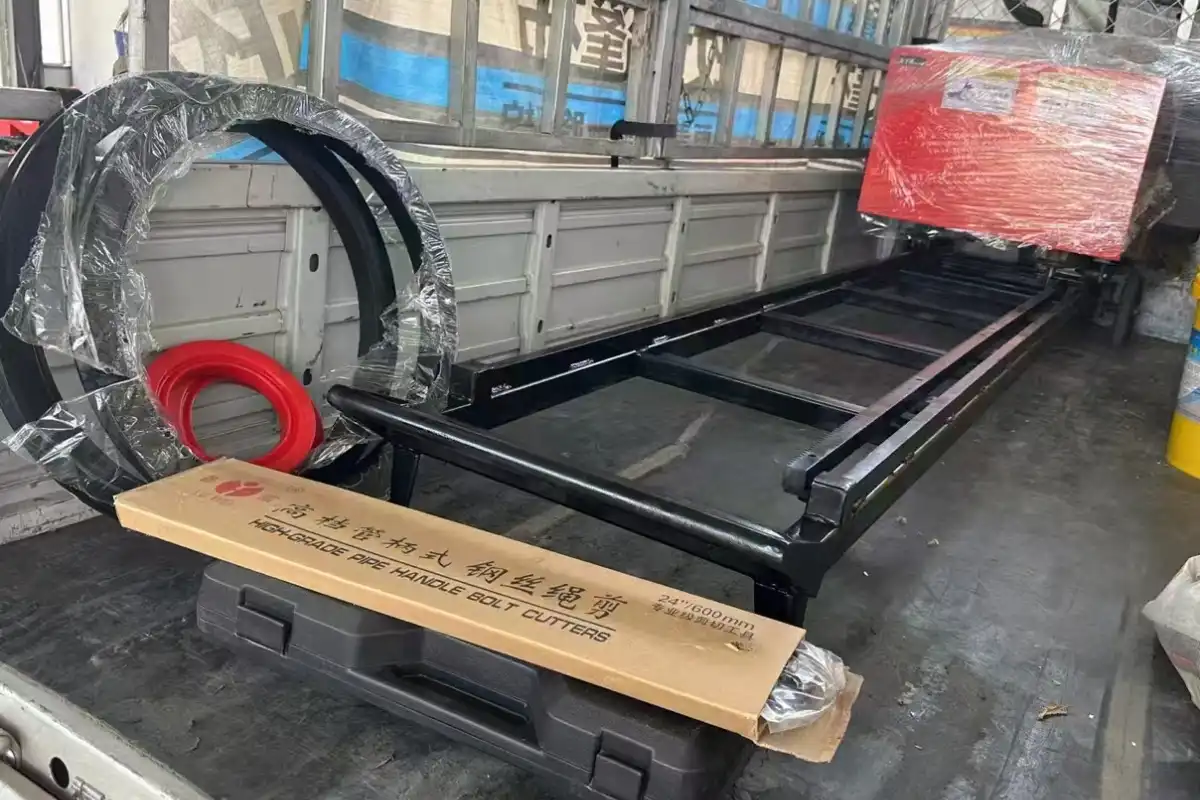
Marine packaging protects capital assets during international transportation. Industrial-grade containers with anti-corrosive treatments and stronger structural supports protect fine equipment from sea transport environmental exposure and mechanical shocks. Packing equipment so it may be placed without fixing it reduces damage claims.
Documentation services remove paperwork that hinders international commerce. Certificates of origin, specialist inspection reports, and compliance statements satisfy importing nations without forcing purchasing departments to learn intricate government processes. Turnkey documentation assistance speeds up the purchase process so buyers can concentrate on tools, not paperwork.
Future Trends and Technological Advancements in Wire Saw Stone Cutting
Smart Technology Integration
Wire saws for stone cutting linked to the internet of things (IoT) become data-generating equipment in integrated production management systems. In real time, embedded sensors monitor cutting settings and provide performance data to cloud platforms, where analytics algorithms enhance things. Machine learning models may uncover patterns that relate wire tension, linear speed, and material hardness for optimal cutting. Even when circumstances change, they automatically adjust settings to keep the equipment functioning well.
From this data, predictive repair tools may be built. Vibration analysis detects worn bearings before they fail, allowing scheduled breaks instead of emergency repairs. Motor current signals indicate mounting electrical issues that consumers don't notice until the item fails. These preventive measures may extend equipment life and save production delays and maintenance expenses.
Remote tracking centralizes professional aid regardless of equipment location. Experts from engineering centers diagnose the problem and utilize video connections and sensor data to guide on-site specialists through debugging. Virtual presence provides professional aid to distant mining locations without local technological resources. In remote areas with lengthy repair wait times, this keeps equipment functioning.
Material Science Advancements
Diamond synthesis methods provide cutting beads that are more durable and suitable for particular stones. Controlled crystal growth procedures provide grain shapes that balance cutting power and wear resistance in synthetic diamonds. Advanced bonding matrices protect diamond particles while showing novel cutting edges. The duration between wire replacements rises. These novel methods decrease consumables per cubic meter cut, improving operational costs.
Wire core materials improve wear and corrosion resistance over time. When water coolant contains stone minerals, stainless steel alloys and coatings prevent cable corrosion. In chemically severe cutting settings, this prevents cables from breaking. Better flexibility allows tighter radius bends without fatigue cracks. This allows cutting complicated forms in one operation.
Coatings reduce friction and let heat escape. Special surface treatments help coolant travel down the wire. This decreases operating temperatures that accelerate diamond and matrix bond breakage. Less friction reduces motor loads and energy usage. This reduces expenses and meets environmental objectives.
Sustainability and Safety Evolution
Environmental responsibility is becoming relevant in tool design. Reduce fresh water usage via closed-loop water recirculation. This is crucial in arid regions where mining must compete with agricultural and urbanization. By removing fine stone from the coolant, advanced filtration may reuse the water and create dry rubbish that can fill quarries or be converted into aggregate goods. These methods ensure mining operations fulfill firms' social responsibility objectives and stringent environmental regulations.
Workers and neighborhood air quality are protected by dust suppression systems. Integrated misting systems collect airborne particles at the cutting zone before they spread over the work site. Enclosed cutting rooms on stationary machines keep particles out, making the workplace safer and reducing cleaning. These health and safety gains occur when stone processing workers become more aware of silicosis hazards and exposure limits are tightened.
Ergonomics reduce worker fatigue and injury. Techs may operate from comfortable positions since wireless remote controllers eliminate the physical strain of shifting heavy control panels. Automated material handling reduces manual lifting, preventing musculoskeletal problems in quarry operations. Businesses experiencing problems hiring and maintaining talented personnel benefit from worker-centered design enhancements.
Conclusion
Wire saw for stone cutting technology improves speed and precision in quarrying, manufacture, and demolition. Constant usage, accurate kerf control, and easy maintenance answer stone processors and concrete constructors' key issues. Equipment selection depends on the stone type, quantity of work, and budget, as well as the supplier's manufacturing quality, technical assistance, and replacement parts. Innovative technologies like the Internet of Things (IoT) and improved materials promise higher performance, while eco-friendly operations fulfill environmental management standards. Companies considering purchasing cutting equipment should consider overall ownership costs and operational flexibility, not simply the transaction price.
FAQ
1. What maintenance schedule should I follow for wire saw equipment?
Routine maintenance intervals depend on the duty cycle and operating conditions. Wire tension, coolant flow rates, and wear on pulleys and guide wheels should all be checked every day. Bearing lubrication and drive belt tension checks are tasks that need to be done every week. Every month, full checks look at the state of the wire beads, hydraulic systems, and electrical connections. When cutting speed drops noticeably or surface finish quality goes down, it's time to replace the diamond wire. Keep detailed maintenance logs to find patterns that may mean that service intervals or operating procedures need to be changed.
2. How do I select between manual and automated wire saw systems?
The best level of automation depends on the number of products made and the types of products made. Fabrication shops that work on a wide range of custom orders can benefit from manual systems because each cut is guided by the operator's knowledge, which means lower initial costs and more freedom. Automated CNC machines are worth the extra cost when they can cut a lot of standard goods with uniform quality without having to be watched all the time. Look at your yearly cutting volume and the changes in the products you cut to find the point where an investment in wire saw for stone cutting technology breaks even and the labor savings and increased output are worth it.
3. Can wire saws cut materials other than natural stone?
Beyond granite and marble, wire saw technology is adaptable to other hard materials. A big area of use is reinforced concrete, and there are special wire formulas made to cut through steel rebar that is buried in concrete. Wire saws are used a lot in projects that involve tearing down bridges and changing structures because they cut accurately and with little vibration. Some systems can cut metal parts, ceramics, and mixed materials, but the diamond beads have to be matched to the hardness and abrasiveness of the material being cut.
Partner with Goldfen Machinery for Advanced Wire Saw Solutions
With ISO 9001 certified manufacturing and over 20 years of engineering experience, Goldfen Machinery offers tried-and-true wire saw for stone cutting technology. Our crawler-type systems have 37KW motors with linear speed control from 0 to 45 m/s, radio remote operation, and all-terrain movement that are made for tough quarry settings. We keep smart stockpiles of spare parts to ensure delivery within 15 to 25 days for normal setups. For jobs that need to be done quickly, we can also offer expedited scheduling. As a direct manufacturer and supplier, we can offer you competitive factory prices, free technical advice, and remote support 24 hours a day, seven days a week to make sure your equipment is always working. Get in touch with our team at sales@goldfenwiresaw.com to talk about unique cutting options that meet your needs.
References
1. Burgess, P., & White, T. (2018). Advanced Stone Processing Technologies: Equipment Selection and Operational Optimization. Industrial Mining Publications.
2. Chen, M., & Rodriguez, L. (2020). Diamond Tool Manufacturing: Metallurgy, Quality Control, and Performance Analysis. Journal of Materials Engineering, 45(3), 287-304.
3. European Stone Industry Federation. (2019). Best Practices in Quarry Safety and Environmental Management. Brussels: ESIF Technical Committee.
4. Hartmann, J. (2017). Comparative Analysis of Stone Cutting Methods: Cost, Efficiency, and Environmental Impact. International Journal of Quarrying and Mining Technology, 32(4), 156-173.
5. National Stone Council. (2021). Wire Saw Systems: Technical Standards and Safety Guidelines. Washington: NSC Engineering Division.
6. Zhang, Q., & Anderson, K. (2022). IoT Integration in Stone Processing Equipment: Implementation Strategies and Performance Metrics. Automation in Construction, 138, 421-439.
Online Message