
Oct 30, 2026
The Advantages of Diamond Wire Cutting for Granite
Your choice of method can make or break your business when you have to cut rock quickly and accurately. The use of specialized tools like granite profiling diamond wire has made diamond wire cutting technology a game-changer in the quarrying and processing of stones. This high-tech way of cutting uses durable steel wire cores with high-quality diamond beads inserted inside them to cut through rock very accurately and quickly. Diamond wire cutting produces better surface finishes, reduces material loss, and lowers operational costs significantly compared to traditional grinding or sawing methods that produce a lot of waste and need regular maintenance. For quarry owners, stone fabricators, and building companies all over the US, knowing these benefits isn't just important for keeping competitive; it's also a way to improve how they make stone and complete projects.

Understanding Granite Profiling Diamond Wire
What Makes Diamond Wire Technology Unique
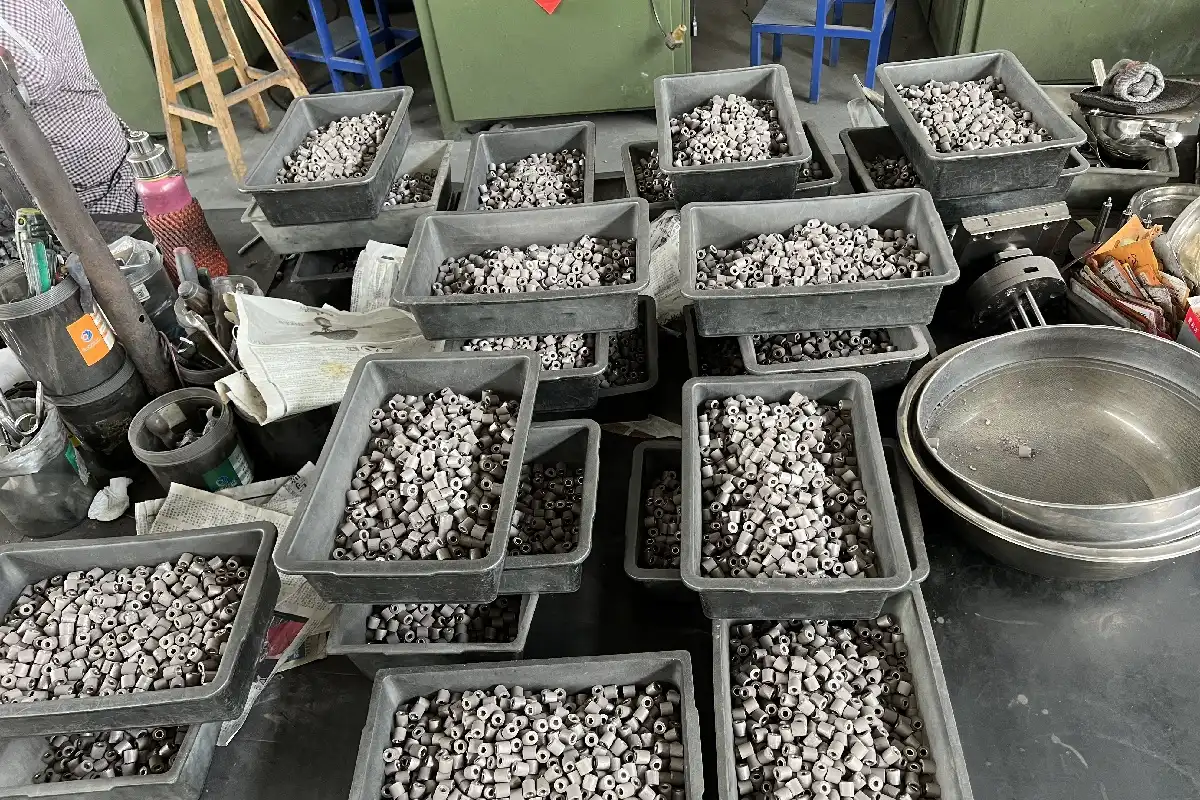
When it comes to cutting tools, granite profiling diamond wire is a special kind that was made for complicated stone-shape jobs. The structure is made up of synthetic diamond particles, usually between 30 and 40 mesh, that are bound together in a cobalt-based or iron-cobalt alloy framework. The diamond beads are spaced out very exactly along the core of a high-tensile steel cable. There are about 37 to 40 beads per meter of wire. The part is protected by a coating made of injection-molded vulcanized rubber or thermoplastic polyurethane. This keeps the cable safe from the rough granite slurry and keeps the bead spacing the same even when centrifugal forces reach speeds of 22 to 30 meters per second.
Core Components and Specifications
Our wire systems usually have bead sizes that range from 7.2mm to 9.0mm, but for specific tasks, we may use the 8.8mm setup, which is perfect for making small-radius turns with great stability. The jointless endless design gets rid of the shaking that happens at the points where wires connect in regular wire systems. When using CNC machines to cut complicated granite shapes, this seamless construction comes in very handy because the required accuracy is often within ±0.5mm. The high-strength steel cores can handle tensile loads of more than 2000 kg, which keeps workers safe during hard quarry work.
How Diamond Wire Cutting Works
The way it cuts is very different from how regular saw blades work. Instead of using an abrasive grinding force, diamond wire cutting uses a controlled abrasion process in which tiny diamond particles remove pieces of granite through thousands of contact points every second. This spread-out cutting action creates very little heat and mechanical stress, which keeps the stone's structure intact. Water cooling devices that send 25 to 30 liters of water per minute help get rid of debris and keep the wire and object from getting too hot, which could damage them. As a result, the cutting process makes surfaces that are amazingly smooth and often require a lot less work afterward.
Comparing Diamond Wire Cutting With Other Granite Cutting Methods
Diamond Wire Versus Circular Saw Blades
In the granite business, traditional circle saw blades have been used for decades, but they have some problems that diamond wire methods can solve. Rotational cutting is how circular saws work. This creates strong horizontal forces that can break up brittle rock into tiny cracks. Also, these tools need rigid frames to be mounted on, and they can only cut in straight lines or simple curves. Diamond wire systems, on the other hand, can be used in more than one way and produce cutting forces that are spread out along the length of the wire instead of being concentrated at one blade edge. Because of this feature, it is possible to make architectural columns, curved balustrades, and unique sculptures that would not be possible or practical to do with circle saws.
Performance Comparison With Chain Saws
For cutting stone, chainsaw technology uses segments with diamond tips that are attached to a continuous loop chain. These tools can make some curved cuts, but they wear out quickly and need to be serviced often because the chain joints and guide bar contact points are under a lot of mechanical stress. When used in the same cutting conditions, our granite profiling diamond wire solutions can last up to 40 to 60 percent longer than other options on the market. Compared to chain saw methods that remove the same amount of material, the wire's lighter construction also cuts energy use by about 20 to 30 percent
Cost-Effectiveness Analysis
When looking at the total cost of ownership, diamond wire cutting always does a better job than other methods. Even though the original cost of the equipment may seem higher, operating economics favor wire technology for a number of reasons. Consumable costs go down a lot because diamond wire keeps cutting well for longer before it needs to be replaced. Because managers spend less time on upkeep and blade changes, they need fewer workers. The material yield is higher because the narrow kerf width of wire cutting (often 8–11 mm vs. 15–25 mm for circular blades) keeps more usable stone from each block. When added together, these benefits usually give mid-sized production businesses a return on their investment within 18 to 24 months.
Optimizing Performance and Maintenance of Granite Profiling Diamond Wire
Critical Operational Parameters
To get the best cutting results, you need to pay close attention to a number of factors that are all related. The wire speed should be adjusted based on the hardness of the granite. Class 5 granites (very hard) work best at 22 to 25 m/s, while softer grades can handle speeds up to 30 m/s. When you go faster than what is recommended for hard stone, the diamond "glazes," which means that the cutting surface becomes polished instead of exposed. This makes it much harder to remove material. Another important factor is wire tension. Not enough tension can cause wires to bend and cuts to be curved, while too much tension speeds up cable fatigue and raises the risk of breaking. Usually, you need to keep 1.5 to 2 twists per meter of wire length for proper tension adjustment.
Routine Maintenance Protocols
Systematic repair practices are needed to make wires last longer and reduce unplanned downtime. The quality of the cooling water has a direct effect on performance. Particles in the water that are suspended above 200 parts per million can cause diamonds to shine too quickly. This degradation can be stopped by putting in place basic filtration systems. As part of regular inspections, the rubber coating should be looked at visually to make sure it is still in good shape, the space between the beads is even, and there are no early signs of cable strand breakup. When wire performance starts to go down with a granite profiling diamond wire, the cutting action can often be brought back by "dressing" it. In this process, the wire cuts into soft, abrasive materials like dressing bricks to remove worn matrix metal and reveal new diamond particles.
Troubleshooting Common Issues
During radius cutting, wires usually break because they aren't rotated enough or are under too much tension for tight-radius jobs. To avoid these problems, CNC feed speeds should be slowed down when the cutting line changes direction quickly. Choosing the right bead bonding patterns for different types of granite is another common problem. For harder granites, you need softer bonds that are high in cobalt. These bonds let the diamonds stay exposed through controlled matrix weathering. On the other hand, harder iron-based bonds work better for softer stones and last longer. If the rubber coating starts to peel, it usually means that the system is too hot. This can be fixed by increasing the flow of cool water to the wire entry and exit points.
Procurement Strategies for Granite Profiling Diamond Wire
Selecting the Right Wire Specifications
The first step to successful procurement is to make sure that the wire's properties fit your business needs. The type of stone is the most important thing to think about. Granites that are high in quartz need different diamond concentrations and bond formulations than varieties that are high in feldspar. The size of the project affects the choice of wire thickness and bead spacing. For example, high-volume quarry operations may want more durable setups that focus on longevity, while custom fabrication shops may pick specs that are best for fine details. If you understand these technical connections, you won't make the expensive mistake of buying the wrong wire that doesn't work right or runs out too quickly.
Evaluating Supplier Capabilities
In addition to product specifications, choosing the right supplier has a big effect on the long-term success of an operation. The diamond wire business has a wide range of manufacturing quality, so it is important to check production standards. Look for providers that have ISO 9001 certification and provide clear records of quality control tests, such as tensile failure analysis, bead pull-off testing with a minimum of 600N of binding force, and concentricity inspection data. Reliable guarantee terms should cover problems with the way the product was made and make it clear what operations are required to keep the warranty good. Technical support should be given extra attention—suppliers that offer 24/7 remote help and thorough training materials show that they care about their customers' success after the sale.
Logistics and Inventory Considerations
Strategic buying is more than just choosing good items; it also means making sure they are available at the right time. Standard granite profiling diamond wire configurations from well-known manufacturers usually ship within 15 to 25 days, but custom specifications may need 30 to 45 days. Managing time-sensitive project needs is easier when you have relationships with suppliers that offer "fast-track" priority scheduling. A lot of businesses that are successful keep a strategic stock of common types of wire and important extra parts like guide wheels and tension wheels. They do this by weighing the cost of carrying these parts against the cost of production stops. When deciding to buy in bulk, keep in mind that rubber-coated wire goods will last much longer if they are stored properly in temperature-controlled, low-humidity areas.
The Future Outlook and Market Trends of Diamond Wire Cutting in Granite Industry
Technological Innovations Reshaping the Industry
New, cutting-edge discoveries in the science of diamond materials are always making wires work better. New developments in the production of synthetic diamonds have made it possible to make particles with more regular crystal structures and better heat stability. This means that the diamonds will last longer and work better at different granite hardness levels. New developments in wire design include surface-coating technologies that make diamond distribution more even and particle retention stronger. Inconsistent cutting rates and uncertain wire life have been problems in the past that have made it hard for procurement managers to plan production reliably. These changes fix those problems.
Automation and Smart Manufacturing Integration
When diamond wire technology, CNC automation, and Industry 4.0 ideas come together, they make it possible to make stones in amazing new ways. More and more modern wire saws have real-time tracking systems that keep an eye on cutting forces, wire tension, and the parameters of the cooling water. These systems then change the operating settings automatically to keep the machine running at its best. Predictive maintenance algorithms look at sensor data to find early warning signs of mechanical or wire problems. They then plan maintenance actions to be taken before they break. These smart systems lower the level of skill needed by operators while also increasing the accuracy of cuts and the rate at which equipment is used.
Market Growth and B2B Opportunities
An analysis of the industry shows that the use of diamond wire is growing steadily across North American markets, thanks to a number of factors coming together. As the cost of labour goes up, the efficiency benefits of wire technology become even more appealing. Environmental laws that limit noise and dust pollutants support the cleaner way that wire cutting is done. Custom architectural stonework and high-end internal uses are becoming more popular. To meet this demand, only wire systems can provide the complicated shaping capabilities that are needed. Because of these changes, equipment distributors and area agents have more chances to build profitable companies around wire saw technology and supplies.
Conclusion
Granite quarrying and processing have been completely changed by diamond wire-cutting technology, which has made cutting more accurate, operations more efficient, and costs lower. Traditional methods can't make complicated shapes like granite profiling diamond wire systems can. These systems also reduce material waste and the need for upkeep. If you run a large quarry, a custom fabrication shop, or are in charge of engineering projects, knowing these benefits will help you make better purchasing decisions that will put you ahead of the competition. The technology keeps getting better by using new materials and integrating smart production. This makes sure that early adopters continue to get practical benefits. To make implementation work, you need to choose the right wire specifications, work with dependable suppliers, and stick to disciplined organizational practices. These are all investments that constantly pay off in the form of higher efficiency and lower total running costs.
FAQs
1. What causes a wire to snap during tight radius cuts?
Snapping usually happens when the wire isn't rotated enough (it needs to have 1.5 to 2 twists per meter) or when there is too much stress for the radius being cut. If the cutting line changes direction quickly, slowing down the CNC feed speed can help keep this from happening. The right flow of cooling water at the entry and exit points also lowers the stress caused by heat that can cause things to break.
2. How do I choose the right bead bond for different granite types?
Class 5 granites are harder and need bonds that are softer and rich in cobalt so that the matrix can wear away slowly and new diamond particles can be exposed all the time. Harder iron-based bonds work better with softer types of granite because they make the stones last longer and be more durable. Your supplier should give you advice on which bonds to use based on the types of granite you're working with.
3. What linear speed works best for profiling hard granite?
For hard granite measuring, a straight speed of 22 to 25 meters per second works best. Diamond glazing happens when speeds are higher than 30 m/s on hard stone. This means that the bead surface gets smooth and stops cutting well. Matching speed to material hardness makes cutting more efficient and extends the life of the wire.
Partner With Goldfen Machinery for Superior Diamond Wire Solutions
It has taken Goldfen Machinery more than 20 years of hard work to create high-performance diamond wire saw systems that help quarry owners and stone fabricators with their toughest problems. Our granite profiling diamond wire supplier's skills mix direct factory prices with years of technical experience to make equipment that always works better than expected in the industry. We keep enough stock on hand to be able to complete standard configurations right away, with wait times of just 15 to 25 days. In addition, our engineering team can make solutions that are specific to your granite types and production needs. Full technical support includes remote help 24 hours a day, seven days a week, thorough training materials, and dependable supply chains for spare parts that keep your production going. We make sure that every system we sell meets the standards for quality management set by ISO 9001. We also provide full export documentation and compliance support to make international purchasing easy. If you want to change the way you cut granite with technology that will increase productivity and lower costs, email our team at sales@goldfenwiresaw.com to talk about how our solutions can help you with your specific operational problems.
References
1. Anderson, J. M. (2019). Advanced Diamond Tool Technology for Natural Stone Processing. Stone Industry Technical Press.
2. Chen, W., & Roberts, K. L. (2021). "Comparative Analysis of Diamond Wire Sawing Systems in Granite Quarrying Operations." International Journal of Stone Engineering, 15(3), 287-304.
3. Diamond Tool Manufacturing Association. (2020). Industry Standards for Diamond Wire Saw Performance and Safety Testing. Technical Publication Series.
4. Harrison, D. P. (2022). Modern Stone Fabrication: Technologies, Techniques, and Best Practices. Industrial Press.
5. Martinez, R., & Thompson, S. G. (2018). "Economic Analysis of Diamond Wire Cutting Versus Traditional Methods in Large-Scale Quarry Operations." Journal of Mining and Materials Processing, 42(7), 1156-1173.
6. Wilson, E. A. (2023). Automation and Digital Integration in Stone Processing Industries. Manufacturing Technology Publishers.
Online Message