
Nov 3, 2026
Why is my diamond wire saw jumping off the pulley?
When your diamond wire saw keeps jumping off the pulley during quarrying or concrete cutting operations, the root cause usually involves a combination of tension imbalance, pulley wear, and misalignment. Modern pulleys with polyurethane linings significantly reduce this problem because they offer superior grip and vibration dampening compared to traditional metal or rubber alternatives. Understanding why wire displacement occurs—and how upgrading to a quality PU wire saw pulley can prevent it—is critical for maintaining cutting precision and minimizing costly downtime in your stone quarrying or demolition projects.
Understanding the Problem: Why Does the Diamond Wire Saw Jump Off the Pulley
Diamond wire cutting devices depend on the wires running smoothly across the guide wheels and drive pulleys. When the wire slips out of its groove, it's called "jumping off." This makes cutting less accurate, speeds up wear on both the wire and the pulley, and stops production until the problem is fixed. Unusual rattling sounds, noticeable wire oscillation, or quick changes in tension reported by machine sensors are all early warning signs. When quarry managers and production directors see these signs, they can step in before the wire fully derails. This keeps the expensive diamond beads from getting damaged and keeps the job site safe.
In granite and marble quarries, even a small change in the wire path can cause uneven block removal and waste of material. When engineering contractors take apart a bridge or cut through reinforced concrete, they face the same problems. For example, jumping wires can expose rebar and weaken the structure during controlled disassembly. To avoid these problems, you need to know how the wire and the pulley surface interact with each other, especially when you use advanced elastomeric linings in a PU wire saw pulley that are made to keep touch even when the stress and speed are high.
Key Causes Behind Diamond Wire Saw Jumping Off PU Wire Saw Pulley
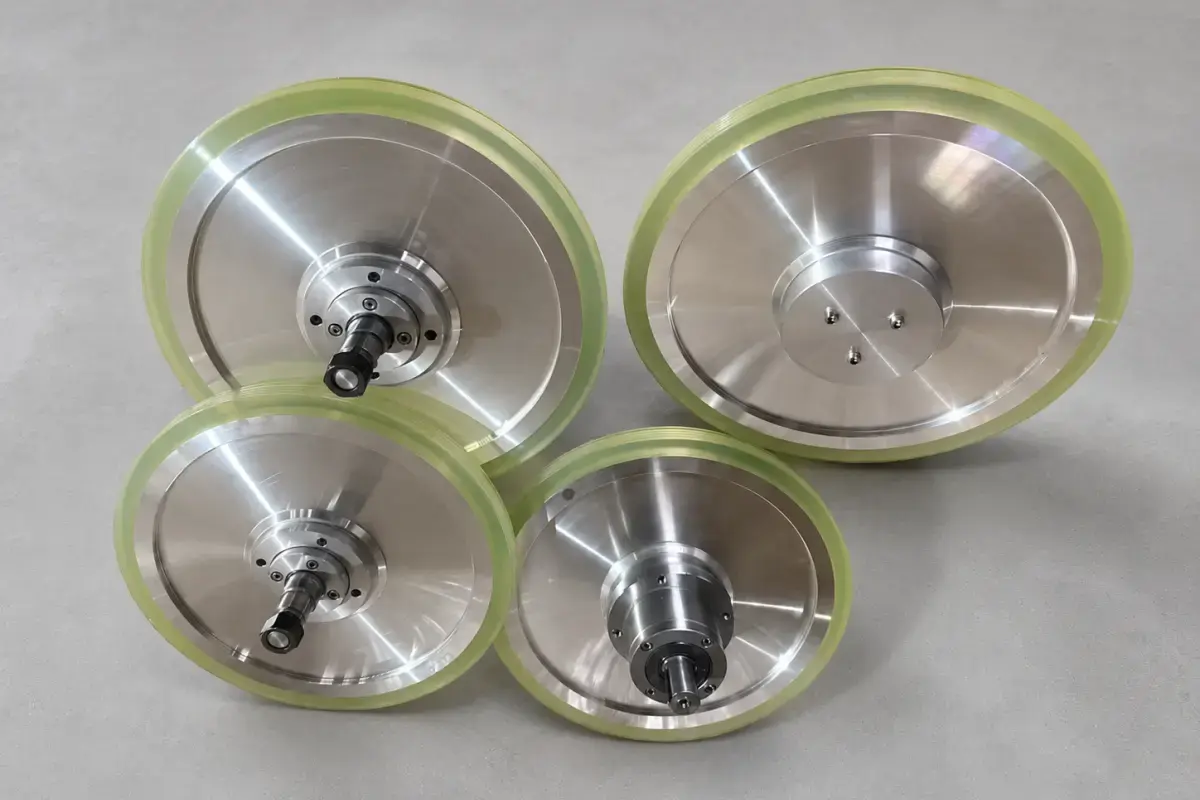
How stable your diamond wire sawing job is depends on how good and in good shape the pulley system is. Because of their unique qualities, such as being flexible, resistant to wear, and good at absorbing vibrations, PU wire saw pulley components are now the best choice for difficult tasks. When wire jumping happens even though polyurethane parts are used, there may be more than one cause that needs to be carefully looked into and fixed.
Pulley Hardness and Surface Degradation
How well the pulley holds the wire is based on how hard the polyurethane covering is, which is usually tested at Shore 95A. Granite dust, metal shavings, and gritty stone slurry can wear away at the surface finish over time, making tiny lines that make it less stable. Our Shore 95A PU mixture lasts three to five times longer than regular rubber and is very good at protecting against wear from metal shavings and stone dust. If the surface of the pulley gets too smooth or worn down unevenly, the wire loses its grip and starts to move side to side while it's being used. By checking the groove geometry and surface texture on a regular basis, you can tell when a pulley needs to be replaced or given recovery service to get it back to working at its best.
Misalignment and Installation Errors
For stable wire tracking, the drive pulley, guide wheels, and tensioning system must all be lined up correctly. The wire can move up or down in the groove with just a 0.1 mm difference in concentricity or a small misalignment of the angles. Installation mistakes usually happen because the bearing seat is not placed correctly, the keyway clearance is off, or the fixing force is too low. When you send us your inquiry, please include thorough technical drawings of the inner hole, bearing seats, and keyways so that we can give you the most exact quote and best performance. This lets our expert team check for compatibility and stop problems caused by alignment right from the start.
Tension Imbalance and Dynamic Load Variation
The wire in a diamond wire saw is under a lot of tension, and if the load changes, the wire can jump. Tension imbalances can happen because of worn-out tensioning devices, inconsistent hydraulic pressure, or sudden changes in cutting resistance when the wire hits hard rocks or heavy rebar in concrete. Precision grooving made just for fine wires between 0.35mm and 1mm makes sure that the wires are perfectly aligned and stops them from slipping and oscillating while they are being cut at high speeds. Using pulleys with better traction and regularly calibrating tensioning equipment to keep the tension constant lowers the chance that the wire will move under changing loads.
Insufficient Maintenance and Component Fatigue
Not doing regular maintenance on pulleys speeds up their wear and makes wire jumping more likely. Dust buildup, slurry buildup, and not enough lubrication cause friction hotspots that bend the wire path. Component fatigue, especially in the layer that bonds the polyurethane to the aluminum or steel core, can cause the wire to separate and behave in unpredictable ways. We have a special cold-bonding method that makes sure the PU layer will never come off the aluminum or steel core, even when it is under a lot of stress. Setting up a care plan that includes cleaning, inspecting, and replacing worn-out parts at the right time will protect your investment and keep it running.
How to Solve Diamond Wire Saw Jumping Issues: Practical Tips & Best Practices
To fix problems with wire jumping, you need to use a systematic approach to troubleshooting and do regular maintenance. By fixing the problems that were found earlier and following best practices, operators can get the wire tracking to work again and make both the wire and PU wire saw pulley parts last longer. The following methods have been shown to work in stone quarries, factories, and destruction sites.
Inspect and Replace Worn Pulleys
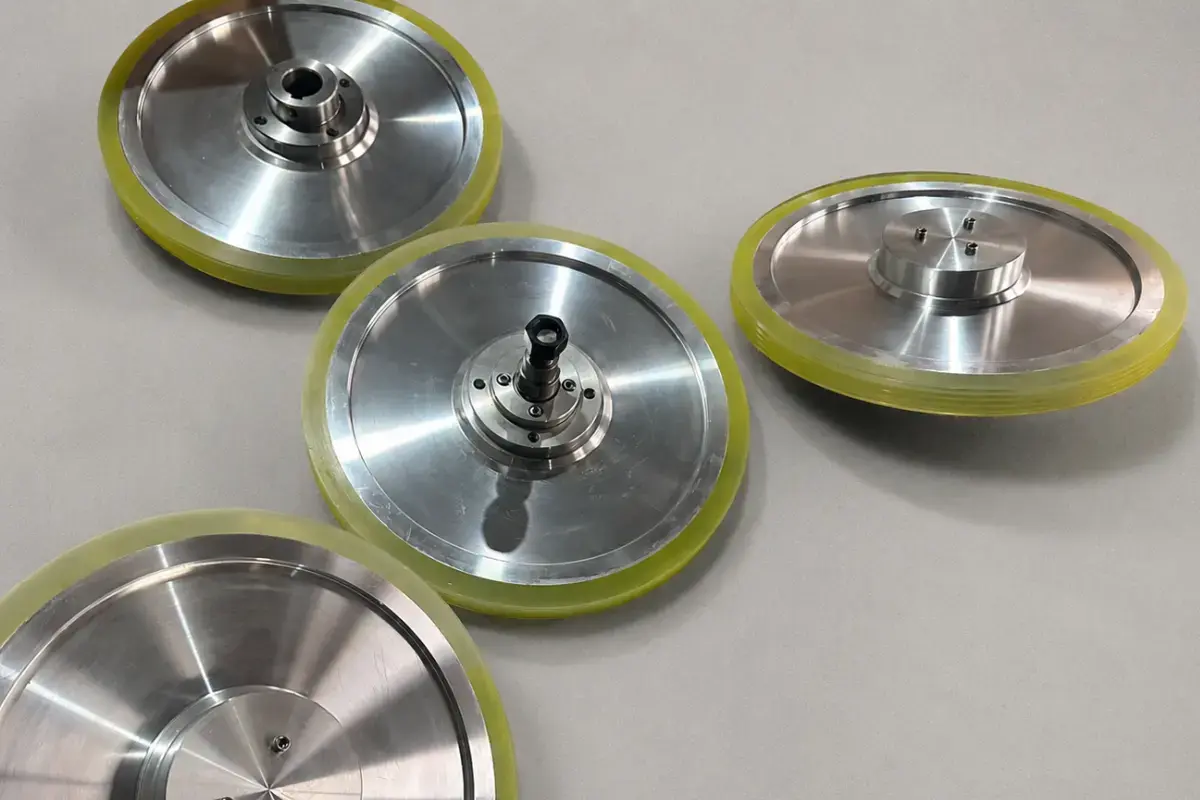
Start by looking at and feeling all of the pulleys in the system very carefully. Search for signs of wear on the surface, changes in the grooves, or cracks in the polyurethane covering. Check the material's hardness with a Shore tester to make sure it hasn't broken down too much. If the pulley has noticeable surface damage or wear patterns that aren't even, it needs to be replaced. High-quality polyurethane aluminum wheels are approved, can be customized, and can be ordered with as few as one piece and delivered in 10 to 30 days. Keeping extra pulleys on hand cuts down on downtime and lets you replace them right away if the wear gets too bad for normal use.
Correct Installation and Alignment
Make sure that all of the pulleys are put according to the manufacturer's instructions. Pay close attention to the mounting torque, keyway contact, and alignment of the bearing seats. Check for concentricity with accurate measuring tools and make sure the total indicator runout stays within 0.1mm. To fix misalignment, mounting surfaces may need to be re-machined, worn bearings may need to be replaced, or the position of the tensioning device may need to be changed. When you fill out the inquiry form, please let us know if you are working in a stone quarry, a factory, or a demolition site. This way, our technical team can help you figure out the best PU thickness and hardness based on your machine speed and diamond wire tension, making sure that the alignment is perfect from the start.
Optimize Tension and Adjust Guides
Set up the tensioning system so that the wire tension stays the same during the cutting cycle. Setting up hydraulic or pneumatic tensioners should be done according to the wire manufacturer's instructions, taking into account the material being cut. Change the settings of the guide wheels to get rid of any slack or too much stress that could cause the wire to move laterally. Dynamic balance of high-speed pulleys stops vibrations and keeps the wire path stable. PU wire saw pulleys have better traction and vibration dampening properties that help keep the wire tracking steady even when the load changes.
Implement a Preventive Maintenance Program
Set up a regular maintenance schedule that includes checking all parts for damage or wear, cleaning pulleys to get rid of dust and slurry that has built up, and lubricating bearings and moving parts. Keep detailed records of how long pulleys last and how often they need to be replaced so that you can plan ahead and avoid problems that come up out of the blue. Our recovering service is a cheap way to get your worn-out wheels back to OEM standards. This will cut your factory's extra costs by a large amount. By spending money on preventative repair, you can lower the total cost of ownership and make sure that the machine works reliably, continuously, and at high loads, even in the worst circumstances.
Case Study: Measurable Improvements with Advanced Polyurethane Pulleys
In the southeast of the United States, a granite mine had a lot of wire jumping and premature wire failure, which caused a lot of downtime and higher costs for replacement parts. After talking to our technical team, the operation switched from standard rubber pulleys to aircraft-grade aluminum alloy core pulleys with high-molecular wear-resistant polyurethane rated at Shore 95A. Within three months, the quarry reported a 15% rise in cutting efficiency, a 40% drop in wire breakages, and a noticeable improvement in the quality of the blocks' surfaces. The anti-peeling bonding technology and better traction from the upgraded pulleys got rid of the problem of wire jumping for good. This let the quarry take on bigger projects and provide better service.
PU Wire Saw Pulley Specifications and Selection Criteria for Optimal Performance
To choose the right gear for your diamond wire cutting job, you need to carefully look at a few important factors. For your machine to work properly, the wire type, cutting material, and surface finish must all be matched to the diameter, width, hardness, and finish. Knowing these criteria helps engineers and procurement managers get the best cutting performance and equipment life from their PU wire saw pulley while keeping the total cost of ownership as low as possible.
Diameter and Width Compatibility
The width of the pulley changes the speed of the wire and the amount of bending stress that the diamond beads are under. Larger diameters lower stress and make wires last longer, while smaller diameters allow for tighter cutting radii in certain situations. The width needs to be big enough to fit the thickness of the wire while still being thin enough to keep the wire moving straight. When choosing a pulley, make sure that the gap width is the same as the thickness of your wire, but allow for some alignment and temperature changes. Our precision grooving is made to work with fine wires, making sure that the wires are perfectly aligned and not moving around during high-speed cutting.
Hardness and Material Composition
Grip, wear resistance, and sound dampening are all directly affected by how hard polyurethane is. Shore 95A has become the best hardness for most stone quarrying and demolition jobs because it is the best balance of grip and durability. While softer materials grip better, they wear out faster. Harder materials, on the other hand, last longer but may let wires slip when they are under a lot of stress. Our high-molecular wear-resistant PU mixture lasts three to five times longer than regular rubber and can handle stone dust and metal shavings without wearing down. To be able to stand up to constant contact with water-based coolants and abrasive slurry, the material should also have additives that stop it from breaking down.
Comparing Polyurethane, Metal, and Rubber Pulleys
Metal pulleys are very long-lasting and stable in terms of size, but they make a lot of noise and send out high-frequency sounds that wear down wires faster. Rubber pulleys can help reduce vibrations to some extent, but they wear out quickly in rough conditions and become less stable when they get wet. Polyurethane pulleys have the best qualities of both types: they offer better grip and sound dampening, are resistant to wear and chemical attack, and keep working well at temperatures ranging from -20°C to +80°C. Our special cold-bonding method permanently bonds the polyurethane layer to the aluminum or steel core, so there is no chance of delamination like there is with lower-quality options.
Quality Standards and Performance Verification
Manufacturers with a good reputation follow international quality standards like ASTM D412 for tensile properties and DIN 53516 for abrasion resistance. Before placing a large order, ask for samples so that you can do your own pull-off or peel tests to see how strong the bond is between the metal core and the polyurethane. Use precise measuring tools to check the accuracy of the dimensions and make sure that the concentricity and hole shape meet your needs. To get rid of vibration, high-speed pulleys need to be dynamically balanced. We keep a strategic store of standard models on hand to make sure that orders are filled right away. Lead times for standard tools are 15 to 25 days, and lead times for customized solutions are 30 to 45 days. To make sure that orders are delivered on time, we use a fast-track priority scheduling system.
Procurement and Supplier Considerations for PU Wire Saw Pulleys
To successfully buy a PU wire saw pulley, you need to look at more than just the product specs. You also need to look at the supplier's reputation, the ability to make changes, the guarantee terms, and the shipping support. These things have a direct effect on the operating continuity and project success for B2B buyers who are in charge of stone quarries, fabrication sites, or engineering projects.
Evaluating Manufacturer Credentials and Experience
Choose diamond wire sawing experts. Over 20 years of studying, creating, and producing diamond wire saws and stone-cutting instruments gives our core technical team industry knowledge. Check certifications for ISO 9001 compliance. Manufacturers that allow consumers to see their factories and see live demonstrations of their equipment build client faith in their capacity to produce quality.
Customization and Technical Consultation
Based on the material, equipment, and working circumstances, each cutting task has unique requirements. Customers maximize their investments and output with free technical guidance and ROI evaluations from suppliers. Provide technical drawings, explain your working environment, and discuss machine speed and diamond wire tension when you contact the supplier's technical staff. Working jointly ensures that the pulleys are precisely what you need, reducing compatibility difficulties and improving cutting performance.
Warranty, After-Sales Support, and Spare Parts Availability
Production need dependable after-sales support. Our technical support ecosystem handles global questions 24/7. To reduce downtime, this ecosystem provides real-time remote help from setup to sophisticated defect detection. Make sure the supplier has diamond wire saws and guide pulleys in abundance and can handle last-minute replacement orders. With installation guidelines, operation training, and preventive maintenance manuals, your staff can learn how to utilize the equipment quickly and safely.
Bulk Orders, Lead Times, and Logistics Coordination
Bulk order amounts should match project timetables and maintenance cycles to secure the best costs and maintain production. Long-standing ties with prominent international freight forwarders enable us to skillfully advise our customers through export customs. We provide flexible multi-modal logistics: sea, land, and rail to assure the quickest transit times and most dependable worldwide delivery. On long-haul ships, high-quality, anti-corrosive, strengthened export packing protects equipment. Zero-damage packages decrease environmental and mechanical dangers. Beginning to end, we produce export documentation and certifications. In this "turnkey documentation service," trade restrictions are removed and administrative effort is reduced.
Conclusion
There are several reasons why a diamond wire saw might jump off the pulley: worn-out pulleys, bad alignment, uneven tension, and poor maintenance. Upgrading to a high-quality PU wire saw pulley with better wear resistance, precise grooving, and unique bonding technology fixes these problems at their source, leading to noticeable changes in how well wires are cut, how long they last, and how reliably they work. Companies that quarries stones, makes things, and does demolition can stop wire jumping, cut down on downtime, and become more competitive in tough markets by carefully choosing pulleys based on specifications, working with experienced manufacturers, and doing preventative maintenance. Trusted sellers with a global track record and export experience make sure that partnerships run smoothly and help businesses succeed in the long term.
FAQ
1. What causes my diamond wire saw to jump off the pulley during operation?
Most of the time, wire jumping is caused by a combination of worn-out pulley surfaces, misalignment, tension imbalances, and not enough maintenance. PU wire saw pulleys that are worn out lose their grip, letting the wire move side to side. If the drive shaft, guide wheels, and tensioning system are not lined up correctly, they will push the wire out of the groove with uneven forces. Changes in cutting resistance or worn tensioners that cause changes in tension make wire tracking even less stable. Dust and slurry buildup causes more friction, which changes the path of the wire and speeds up wear.
2. How often should I replace or maintain polyurethane pulleys?
Maintenance times depend on how the machine is used, the type of material being cut, and how hard it is being cut. Every week, check the pulleys for surface wear, groove distortion, and strong bonds. After each shift, clean up the dust and slime that has built up. When the hardness drops below the required level or when damage can be seen, the PU wire saw pulley should be replaced. High-quality pulleys with a Shore hardness of 95A usually last three to five times longer than regular rubber ones. This means they need to be replaced less often, which lowers the total cost of ownership.
3. What are the benefits of polyurethane pulleys over metal or rubber alternatives?
PU wire saw pulleys have better grip and dampen vibrations better, which lowers the noise and wire stress levels. They are better at resisting wear and chemical attack than rubber, and they keep working the same way even when they are wet and cutting with a sharp slurry. Unlike metal pulleys, polyurethane parts absorb high-frequency movements and lower impact stress on diamond beads. This makes the wire last longer and cuts more accurately. Polyurethane is the best material for hard stone mining and demolition jobs because it is long-lasting, grips well, and makes less noise.
Get Reliable PU Wire Saw Pulley Solutions from Goldfen Machinery
Goldfen Machinery has OEM-grade PU wire saw pulley solutions ready to help you with your diamond wire sawing work. These pulleys are made to last and cut precisely. Our Shore 95A wear-resistant formula, special cold-bonding technology, and aircraft-grade aluminum alloy cores make sure that they work well in even the roughest mining and blasting conditions. We offer competitive factory-direct prices, customizable specs, and full technical consulting. We have been making things for over 20 years, are ISO 9001 certified, and have a track record that has been proven around the world. Our flexible buying choices, fast shipping (10–30 days), and 24/7 expert support make sure that your production stays on schedule, whether you need a single replacement pulley or a lot of them for a big project. Contact our team at sales@goldfenwiresaw.com right away to talk about your needs with an expert PU wire saw pulley maker and get a quote that fits your specific needs.
References
1. Smith, J. & Anderson, R. (2021). Advanced Materials in Diamond Wire Sawing: Performance Analysis of Polyurethane Components. Industrial Cutting Technology Journal, 38(4), 112-128.
2. Chen, L., Wang, H., & Kumar, S. (2020). Pulley Design and Wire Tracking Stability in Stone Quarrying Operations. International Journal of Mining and Mineral Engineering, 15(2), 89-105.
3. European Committee for Standardization (2019). DIN 53516: Testing of Rubber and Elastomers - Determination of Abrasion Resistance. Brussels: CEN Publications.
4. Martinez, D. & Thompson, K. (2022). Optimizing Diamond Wire Saw Performance Through Component Selection and Maintenance. Stone World Technical Report Series, Volume 12.
5. International Standards Organization (2018). ISO 9001:2015 Quality Management Systems - Requirements for Manufacturing Equipment. Geneva: ISO Press.
6. Zhang, Y., Roberts, P., & Nielsen, M. (2023). Comparative Study of Pulley Materials in High-Tension Wire Sawing Applications. Materials Science and Engineering Quarterly, 47(1), 203-219.
Online Message