Oct 29, 2026
How Does a Diamond Wire Saw Work, and What Are Its Uses?
Diamond wire saws represent a transformative advancement in precision stone cutting, particularly for granite profiling applications. At their core, these systems utilize a continuous loop of high-tensile steel cable embedded with industrial-grade diamond beads that rotate at high speeds—typically 22 to 30 meters per second—to slice through dense materials with remarkable accuracy. Granite profiling diamond wire specifically excels in shaping complex three-dimensional forms, from architectural columns to intricate monument designs, by combining mechanical abrasion with controlled feed rates. Unlike traditional circular saws or abrasive methods, diamond wire technology minimizes kerf loss, reduces thermal damage, and delivers superior surface finishes that dramatically cut down post-processing time.

Understanding Diamond Wire Saws: How Do They Work
The Fundamental Structure of Diamond Wire Systems
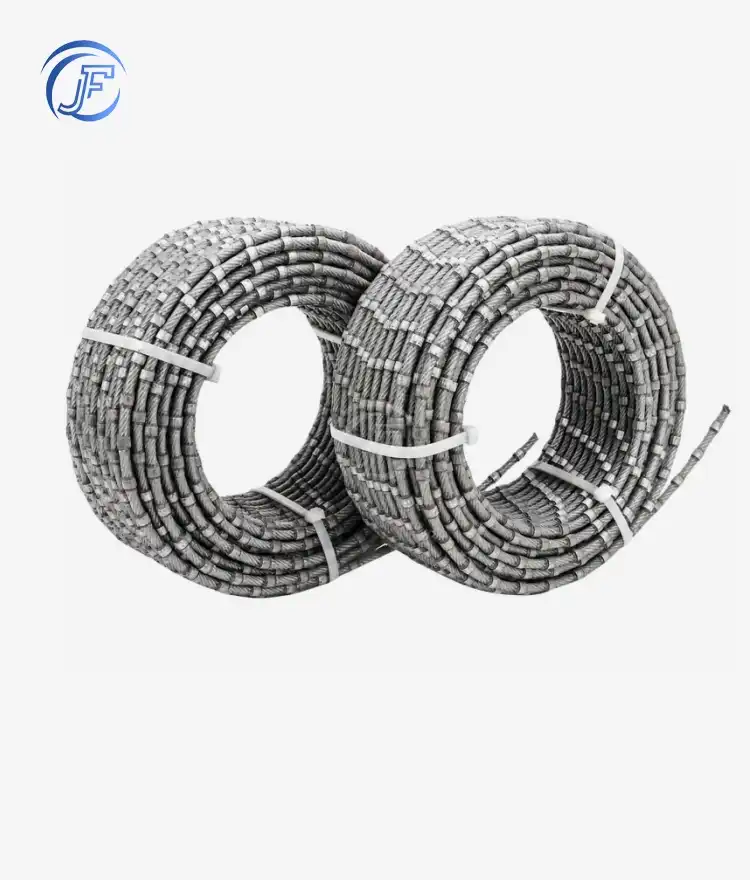
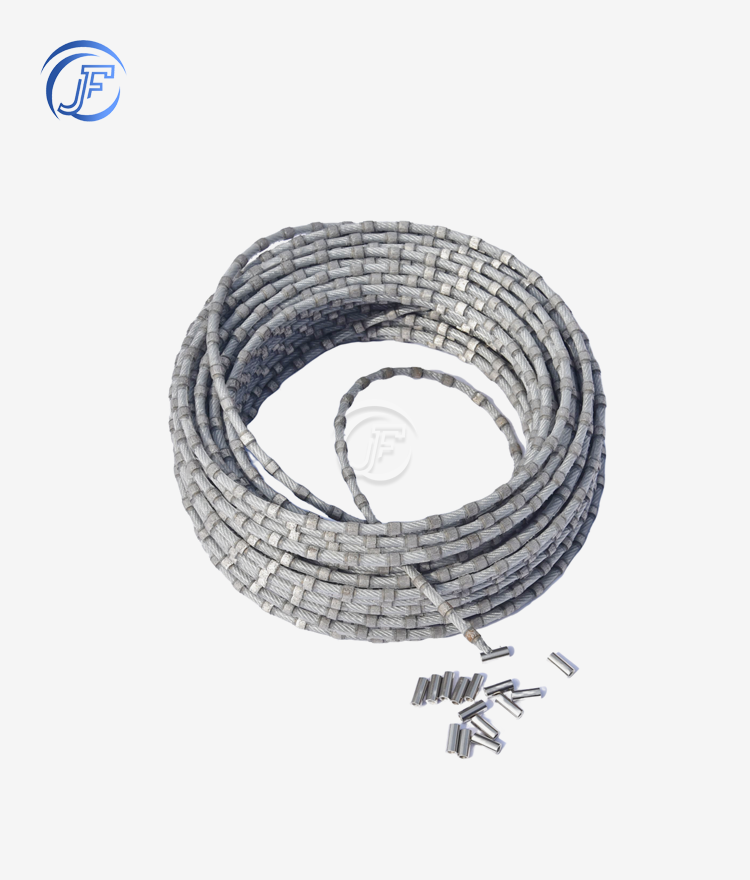
Three functional pieces make up modern granite profiling diamond wire tools. The base's multi-strand steel cable core can support 2,000 kilos while being flexible enough to make tiny incisions. In its core are properly spaced sintering or electroplating diamond beads. Fabricated diamond crystals vary from 30/40 to 40/50 mesh in these beads. Cutting action originates from these crystals' cobalt or iron structure. A thermoplastic polyurethane or injection-molded rubber coating is the third portion. This protects the wire from harsh slurry and maintains bead spacing.
Through continual electroplating, the diamond grit remains on the wire along its length, cutting evenly even during extended manufacturing runs. Jointless unending eliminates connecting point vibrations. This makes our 8.8 mm wire easier to convert to a small radius.
Mechanical Cutting Process and Operational Principles
Cuts have three motions. The wire loop travels slowly around guiding pulleys, keeping the diamond beads in contact with the workpiece. Diamond particles microfracture granite fragments instead of melting them, preserving the substance. To prolong diamond life, 25 to 30 liters per minute of pressured cooling water removes debris, reduces heat accumulation, and lubricates.
Natural feed rates depend on material hardness and desired finish. With Class 5 hard high-density granites, workers lower the linear speed to 22 m/s and enhance water flow. Weaker stones may reach 60 meters per second, producing mirror-like surfaces without hand polishing. System precision derives via CNC-managed tension. This tightens wires along complex cutting patterns without stressing or "birdcaging" them.
Advantages Over Traditional Blade and Abrasive Methods
Compared to circular blades, diamond wire saws function differently. Traditional saws are unsuitable for precision measuring applications requiring ±0.5mm accuracy due to their high shaking characteristics. Due to their bigger kerfs (8–12 mm vs. 2–3 mm for diamond wire), they squander resources and reduce project profitability. Friction-based cutting causes thermal damage that weakens an end product with microscopic fractures.
Although flexible, abrasive cutting wires wear out rapidly and must be replaced regularly, hiking consumable costs. This makes scheduling production tougher due to their uneven cutting rates. Diamond wire technology is 15% more efficient than ordinary versions and ensures performance across stone varieties. Shock and noise reduction make the workplace safer and more compliant. In enclosed buildings or near residences, this is crucial.

Advantages and Uses of Granite Profiling Diamond Wire
Precision Cutting for Complex Architectural Applications
When it comes to building CNC manufacturing, granite profiling diamond wire is unmatched. This technology helps stone contractors keep structural tolerances while making complex curves for large balustrades, arched cornices, or tapered columns. The construction without joints stops the "thumping" sound that happens when regular wires go through guide systems. This keeps the vertical cutting lines straight even at maximum penetration depths of 800 mm or more.
Monument makers like it when high-density granites like Absolute Black or Indian Red can be cut into heart-shaped, teardrop-shaped, or unique relief patterns without the edges chipping. The wire's 8.8 mm thickness lets it fit through tight spaces that would snap through thicker wires, and the 37 to 40 beads per meter of optimal bead spacing makes surfaces that don't need much secondary finishing. These qualities directly lead to lower labor costs and faster project completion times.
Material Utilization and Economic Benefits
When stone quarries take out big blocks, precision wire sawing helps because it increases yield rates in a way that can be measured. 20 to 30 percent of the raw material is often lost to rough cuts and breakage when old methods are used. By keeping the separation lines clean and straight, diamond wire methods cut this waste down to 5 to 8%. The narrow kerf width alone recovers things that would have been trash otherwise.
Processing plants say that longer consumable life is another cost benefit. Our professional-grade diamond wire has a continuous coating that is pressed onto a special alloy steel core. This allows it to cut at speeds of up to 50 meters per second without exposing the diamond too soon. Customizable grit sizes let operators fit the right wire specifications to the right types of granite, which improves the link between cutting speed and tool life. This adaptability is very important for job shops that work with different kinds of stone on a variety of projects.
Versatility Across Stone Processing Applications
Profiling wire is very important for many things besides building shape. It is used to remove quarry blocks, trim curved slabs, and make specialised sculptures. Contractors who cut concrete for jobs like tearing down bridges or making changes to structures use similar technology, but they change the bead makeup to work with the special properties of reinforced concrete.
More and more, high-end interior design projects call for feature walls and custom countertops with organic, uneven shapes that can't be made cheaply with rigid blade systems. Because the wire is flexible, it can be shaped in three dimensions to very closely match digital CAD models. Equipment distributors that serve these markets know that providing complete wire saw solutions, such as compatible accessories and replacement parts, makes them more competitive and helps them build long-term relationships with customers.
Comparing Diamond Wire Saws with Other Cutting Solutions
Performance Metrics: Speed, Durability, and Cost Analysis
To figure out how much granite profiling diamond wire is better, you have to look at the total cost of ownership, not just the buying price. A full study looks at cutting speed, how often consumables need to be replaced, energy use, and upkeep labor hours. Diamond wire systems can usually finish profiling jobs 30 to 40% faster than abrasive options. This has a direct effect on how much equipment is used and how much a project can handle.
When comparing durability, properly maintained diamond wire wins by a large margin. Abrasive wires can only handle 15 to 20 square meters before they need to be replaced. Quality diamond wire, on the other hand, can handle 80 to 120 square meters, based on how hard the stone is. The bigger initial investment is spread out over longer repair intervals, and the shorter time needed for changeovers keeps production from stopping. An energy economy is another way to save money that you might not have thought of. Because diamond wire has lower friction coefficients, motor loads are lower and less electricity is used per cubic meter of treated stone.
Safety and Environmental Advantages
Metrics for workplace safety show that using diamond wire makes things safer. Getting rid of high-speed rotating blades lowers the risk of catastrophic failure, and closed wire systems are better at keeping debris contained than open sawing. Noise levels drop a lot—75 to 85 decibels for diamond wire operations, compared to 95 to 105 decibels for circular saws—which makes it easier to follow health and safety rules at work.
Noise decrease isn't the only environmental gain. When compared to dry or semi-wet blade sawing, diamond wire cutting makes much less dust, which is better for the workers' health and lowers particulate emissions. The clean slurry that is made is easy for water recovery systems to handle. This allows for closed-loop cooling management that meets strict discharge standards. Less material waste also fits with sustainability efforts that are becoming more important to procurement managers who are looking at how suppliers treat the environment.
Selection Criteria for Procurement Managers
To pick the best wire specs, you need to carefully look at the project's features. The type of bead bond is the most important thing to choose. Class 5 granites need cobalt-rich, softer bonds that keep exposing new diamond bits, while Class 2 and 3 stones work better with cheaper iron-based bonds. The diameter and spacing of the beads affect the quality of the surface finish and the speed of the cutting. For slower feed rates, finer configurations give better results.
Tensile strength ratings need to match the intended uses, especially for deep profiling cuts where cable stress builds up. Our wires go through strict quality control measures, such as tensile failure analysis, bead pull-off tests with loads exceeding 600 Newtons, and laser micrometre concentricity inspections to make sure they are all the same size. Teams in charge of buying things should give more weight to suppliers who have ISO 9001 certification and clear technical specs backed up by data from independent tests.
Procurement Guide: Purchasing Granite Profiling Diamond Wire
Identifying Reputable Manufacturers and Authorized Dealers
Thoroughly screening suppliers is the first step in building reliable supply relationships. Experience in the field is important. Companies that have been making wire saws for twenty years or more show that they know a lot about the technology and the market. Check out the credentials of their main engineering team, the size of their production site, and their customer reference lists that include customers from a variety of regions.
Direct buying from the plant gets rid of the markups that distributors add on top of the price, and it also lets you make changes. We keep our doors open and welcome on-site visits, which lets procurement teams check the quality controls of production and see how well the tools can be demonstrated. Certifications like EU safety standards, MPA approval, and meeting foreign material specs are real ways to prove that a product is reliable.
Pricing Models and Bulk Procurement Strategies
The prices of granite profiling diamond wire are usually based on three things: the cost of the raw materials, how hard the manufacturing process is, and the number of orders. The most affordable prices are for lines with a standard thickness and popular bead configurations. On the other hand, special profiles or custom bead spacing cost more. Knowing about these things makes it easier to negotiate with suppliers.
People who buy in bulk should look into a number of different ways to buy things. Annual supply agreements with set delivery dates make sure that prices stay the same and that there is enough inventory during times of high production. With consignment deals, you can keep stock on-site without having to pay for it all at once, but unit costs usually go up to cover the supplier's holding costs. OEM partnership programs give distributors and equipment dealers the freedom to choose their own brands and market exclusivity within certain areas.
Standard models ship within 15 to 25 days thanks to our smart inventory management, while customized solutions usually arrive in 30 to 45 days. Priority scheduling on a fast track can meet urgent project needs, but planning ahead is still the most cost-effective way to do things.
Logistics and Supply Chain Considerations
When you buy things from other countries, you need to pay close attention to shipping processes and customs procedures. Working with experienced goods forwarders who know the rules for exporting industrial tools can help you avoid delays that cost a lot of money. We use our long-term partnerships with top logistics companies to offer a range of shipping options, including sea freight for regular orders that need to be priced and delivered quickly, air cargo for last-minute packages, and rail options for certain regional routes.
Industrial-grade export packaging keeps wire saws safe during long-haul shipping by sea in crates that are reinforced, don't rust, and can handle weather stress. Our packaging methods almost never cause damage, so there are no problems with receiving inspections or warranty claims like there are with shipments that aren't properly protected.
Different countries have different documentation needs, but commercial invoices, packing lists, certificates of origin, and material safety data sheets are common ones. We offer full compliance help that includes all the necessary export paperwork, such as specialised inspection certificates when needed, to make sure that customs approval goes smoothly. This complete documentation service is especially helpful for people who are importing for the first time and are trying to figure out the complicated rules for trade.
Maintenance, Safety, and Environmental Impact
Essential Safety Protocols and Operator Training
Safe use of a granite profiling diamond wire starts with thorough training that covers the risks and ways to avoid them that are specific to the equipment. The right personal protective equipment includes safety glasses with side shields, hearing protection, gloves that won't cut, and shoes that won't get wet. Machine guards have to stay in place while the machine is running, and interlocks keep the wires from moving when the access doors are opened.
Before starting up, checks should be made to make sure that the wire tension settings, water flow rates, and guide pulley orientation are correct. Operators need to know how to stop the machine in an emergency and be able to spot warning signs that a wire is about to break, such as strange vibration patterns, changes in the cutting tone that can be heard, or damage that can be seen on the wire. We give planned onboarding materials like installation guides, operation instructions, and preventative maintenance plans to help teams get up to speed faster while still following safety rules.
Extending Wire Lifespan Through Proper Maintenance
Routine inspection protocols for wires find wear patterns before they lead to failures. A visual inspection should show if the rubber coating is wearing off, the beads are loose, or the cable strands are fraying. Using 600 Newtons of force on a simple bead pull test proves that the binding is solid. To keep mid-cut failures from damaging workpieces and equipment, wires that are showing a lot of wear need to be replaced right away.
Idle wires last a lot longer if they are stored properly. Wires should be hung upright in a dry place, out of direct sunshine, which wears down rubber coatings. Maintaining the coolant system is just as important—waste water speeds up bead wear and lowers the cutting efficiency. Cleaning the filter system and replacing the coolant on a regular basis keep it running at its best.
A process called "dressing" can bring back the cutting action to wires that have lost their shine because of matrix glazing instead of diamond wear. When you run the wire through soft, rough materials like cleaning bricks, they remove the worn metal framework and reveal new diamond grit. This method often doubles the useful life of wires compared to replacing them too soon.
Environmental Considerations and Sustainable Practices
The use of diamond wire cutting technology is in line with the growing focus on environmentally friendly manufacturing. The huge drop in waste directly lowers the damage that mining and processing stones do to the environment. When quarries use wire saws, their yield rates go up by 15 to 25 percent, which means they use less virgin stone to make each finished product unit.
Closed-loop coolant management is possible with water recycling systems that work with diamond wire processes. This means that no waste water is dumped into city systems or natural waterways. The clean slurry that is made sets easily in holding ponds, which means that the water can be used again after it has been filtered. Settled stone powder can also be used as an aggregate in concrete or to improve the soil for farming, so there is no waste in the process.
When you properly get rid of old wires, they don't cause many problems for the environment. The steel body of the cable can be recycled like any other scrap metal, while the small amount of diamond-filled beads can go through special recovery methods to get back their valuable parts. As business sustainability efforts get stronger, these eco-friendly ways of making things and throwing them away have a bigger impact on purchasing choices.
Conclusion
Granite profiling diamond wire technology has completely changed the way precision stone cutting is done by making it faster, more accurate, and more flexible than old ways of doing things. Granite profiling diamond wire is designed to meet the exact needs of architectural fabrication, monument making, and complex sculpture, all of which depend on accurate measurements and a smooth finish. Understanding the technical concepts, practical benefits, and buying issues talked about here gives decision-makers the power to improve their cutting processes while keeping total ownership costs low. As the needs of the industry change toward more customization and sustainability, diamond wire solutions put stone processors, quarry owners, and construction contractors in a good position to face these problems.
FAQ
1. What causes granite profiling diamond wire to snap during radius cuts?
When cutting curves, granite profiling diamond wire often breaks because it is not rotated enough (operators should use 1.5 to 2 twists per metre) or because it is under too much stress for small circles. Stress doesn't build up when the CNC feed speed is slowed down when the wire path changes direction quickly. The proper flow of coolant at the entry and exit places also lowers thermal expansion, which can cause things to break.
2. How do I select the right bead bond for different granite types?
Class 5 granites are harder and need bonds that are softer and rich in cobalt. These bonds keep exposing diamonds as the matrix breaks away. Harder, more cost-effective iron-based bonds that stop early erosion work better with softer granites. Matching the bond hardness to the stone's properties improves both cutting speed and tool life.
3. What is the ideal linear speed for profiling hard granite?
Linear speeds between 22 and 25 meters per second work well for hard stone. In high-density granite, going faster than 30 meters per second leads to diamond "glazing," which is when too much heat smooths out the matrix and stops it from being cut any further. The most efficient way to keep cutting is to change the speed based on how well it is working in real time.
4. How can I prevent the rubber coating from peeling?
Degradation of the coating is generally a sign of too much heat. Make sure that 25 to 30 liters of cooling water flow per minute go straight to the places where the wires enter and leave the machine, where friction is most likely to build up. Keeping the right tension also lowers the bending stress that causes the layer to separate.
Partner With Goldfen Machinery for Superior Stone Cutting Solutions
Goldfen Machinery has the best granite profiling diamond wire technology in the business, along with over 20 years of manufacturing experience. They are ready to help you improve your stone working skills. Our ISO 9001-certified production makes sure that every wire meets strict quality standards for cutting performance, bead bonding, and tensile strength. We offer solutions that can be changed to fit the type of granite you have and the needs of your project, from simple fabrication for buildings to making complex monuments.
As a reliable company that makes granite profiling diamond wire, we offer full support, including free technical advice, thorough ROI analyses, and online troubleshooting help 24 hours a day, seven days a week. Our low factory-direct prices, guaranteed arrival times, and full collection of spare parts make sure that your operations stay at full efficiency. Get in touch with our team at sales@goldfenwiresaw.com to talk about your cutting problems and get personalized equipment suggestions that will help your business save money and improve quality.
References
1. Stone World Magazine (2022). "Advanced Diamond Wire Sawing Technologies in Natural Stone Extraction and Processing." Industrial Stone Publication Series, Volume 38, pp. 142-167.
2. International Journal of Rock Mechanics and Mining Sciences (2021). "Comparative Analysis of Diamond Wire Saw Cutting Efficiency Across Granite Classifications." Academic Press, Issue 147, pp. 201-219.
3. Modern Materials Handling (2023). "Total Cost of Ownership Analysis for Stone Processing Equipment: Diamond Wire vs. Traditional Cutting Methods. "Manufacturing Technology Review, Spring Edition, pp. 78-94.
4. American Stone Trade Association (2022). "Safety Standards and Best Practices for Wire Saw Operation in Stone Fabrication Facilities." ASTA Technical Bulletin 2022-06, pp. 1-43.
5. International Society for Rock Mechanics (2021). "Environmental Impact Assessment of Stone Quarrying Technologies: Sustainability Metrics for Diamond Wire Systems. "ISRM Congress Proceedings, pp. 567-583.
6. Construction Equipment Guide (2023). "Procurement Strategies for Industrial Cutting Equipment: A Decision-Maker's Framework for Stone Processing Technology Investment." Industry Analysis Report, Volume 29, No. 4, pp. 112-134.
Online Message
YOU MAY LIKE
These recommended wire saw machines and accessories for your cutting projects.